GH Axis System

System Overview GH Axis System
The GH Axis — formally the somatotropic axis — is one of the body’s most consequential endocrine networks. It coordinates the production and downstream signaling of growth hormone (GH), a peptide secreted by the anterior pituitary in pulsatile bursts throughout life. Far from being limited to its namesake function, this axis operates as a master regulator of cellular maintenance, body composition, tissue repair, and metabolic equilibrium.


Core Mechanisms Four Research Axes in GH Axis System
The compounds in this system are investigated through four primary mechanistic frameworks. Each represents a distinct entry point into GH Axis System function.
Growth hormone is released in discrete pulses governed by the opposing actions of GHRH and somatostatin at the hypothalamic level. The amplitude and frequency of these pulses are investigated as determinants of downstream IGF-1 production and tissue responsiveness. Age, sleep architecture, body composition, and nutritional state are among the variables studied in relation to pulse dynamics.
Upon binding its receptor, GH activates Janus kinase 2 (JAK2), which phosphorylates Signal Transducer and Activator of Transcription 5b (STAT5b). This cascade regulates the transcription of IGF-1 and other GH-responsive genes in the liver and peripheral tissues. Preclinical models have investigated how alterations in JAK-STAT signaling affect tissue anabolism and metabolic outcomes.
Insulin-like Growth Factor 1 mediates the majority of GH's anabolic effects through binding to the IGF-1 receptor (IGF-1R), activating the PI3K/Akt/mTOR pathway. This downstream signaling promotes protein synthesis, satellite cell activation in muscle, osteoblast activity in bone, and anti-apoptotic effects in multiple tissue types. Research in this area examines how IGF-1 levels correlate with tissue maintenance and repair capacity.
Growth hormone secretagogues (GHS) act via the ghrelin receptor (GHSR-1a), a distinct pathway from GHRH that can stimulate GH release independently or synergistically with GHRH. Peptide secretagogues such as Ipamorelin selectively activate GHSR-1a, making them useful tools for studying GH axis responsiveness without the confounding effects of ghrelin's broader metabolic actions. The interaction between the GHRH and GHS pathways is an active area of investigation in neuroendocrine research.

Related Compounds Research Compounds in This System
The following research compounds are catalogued under the GH Axis System. Each has been characterized in preclinical studies for its interaction with components of the somatotropic axis.
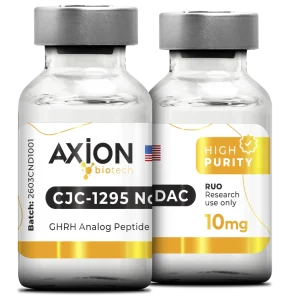
A synthetic analogue of Growth Hormone-Releasing Hormone, investigated in research models for its capacity to extend the half-life of endogenous GHRH signaling through Drug Affinity Complex (DAC) technology. Studies examine its effects on GH pulse amplitude and IGF-1 production.
View Product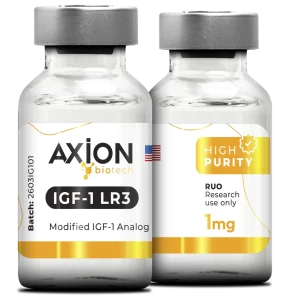
A long-acting recombinant analogue of Insulin-like Growth Factor 1, modified at the arginine-3 position to reduce binding protein affinity and extend bioavailability. Investigated in research models examining downstream GH signaling, muscle protein synthesis, and cellular growth pathways.
View Product
Pathways & Biological Context Key Research Pathways
The GH Axis intersects with multiple regulatory systems. The following pathways are relevant to understanding the biological context of compounds catalogued in this system:
- GHRH/Somatostatin Axis — Hypothalamic regulation of pituitary GH secretion; primary control point for pulse dynamics.
- JAK2/STAT5b Signaling — Intracellular cascade activated by GH receptor binding; regulates hepatic IGF-1 gene expression.
- PI3K/Akt/mTOR Pathway — Downstream of IGF-1R activation; governs protein synthesis, cell growth, and survival signaling.
- Ghrelin/GHSR-1a Pathway — Independent route for GH secretagogue action; studied for synergistic effects with GHRH.
- IGF Binding Proteins (IGFBPs) — Modulate IGF-1 bioavailability in circulation; research context for understanding effective vs. total IGF-1 levels.
- Hypothalamic-Pituitary-Liver Axis — Integrated circuit connecting central hormonal signaling to peripheral IGF-1 production.
- Negative Feedback via IGF-1 — Circulating IGF-1 suppresses GH release at both hypothalamic and pituitary levels; key regulatory constraint.
- GH/Insulin Cross-talk — GH and insulin exert opposing effects on glucose metabolism; studied in models investigating body composition and metabolic balance.

Related Articles - Research Library Explore the Science Behind This System
The Research Library provides in-depth editorial coverage of the mechanisms, evidence, and investigative directions relevant to this system. Each article connects to one or more related compounds in the AXION catalog.
All compounds listed in this system are classified as Research Use Only (RUO). They are not approved for therapeutic, diagnostic, or clinical use in humans or animals. AXION does not make therapeutic claims of any kind. Access to compounds is available through AXION's structured access model.