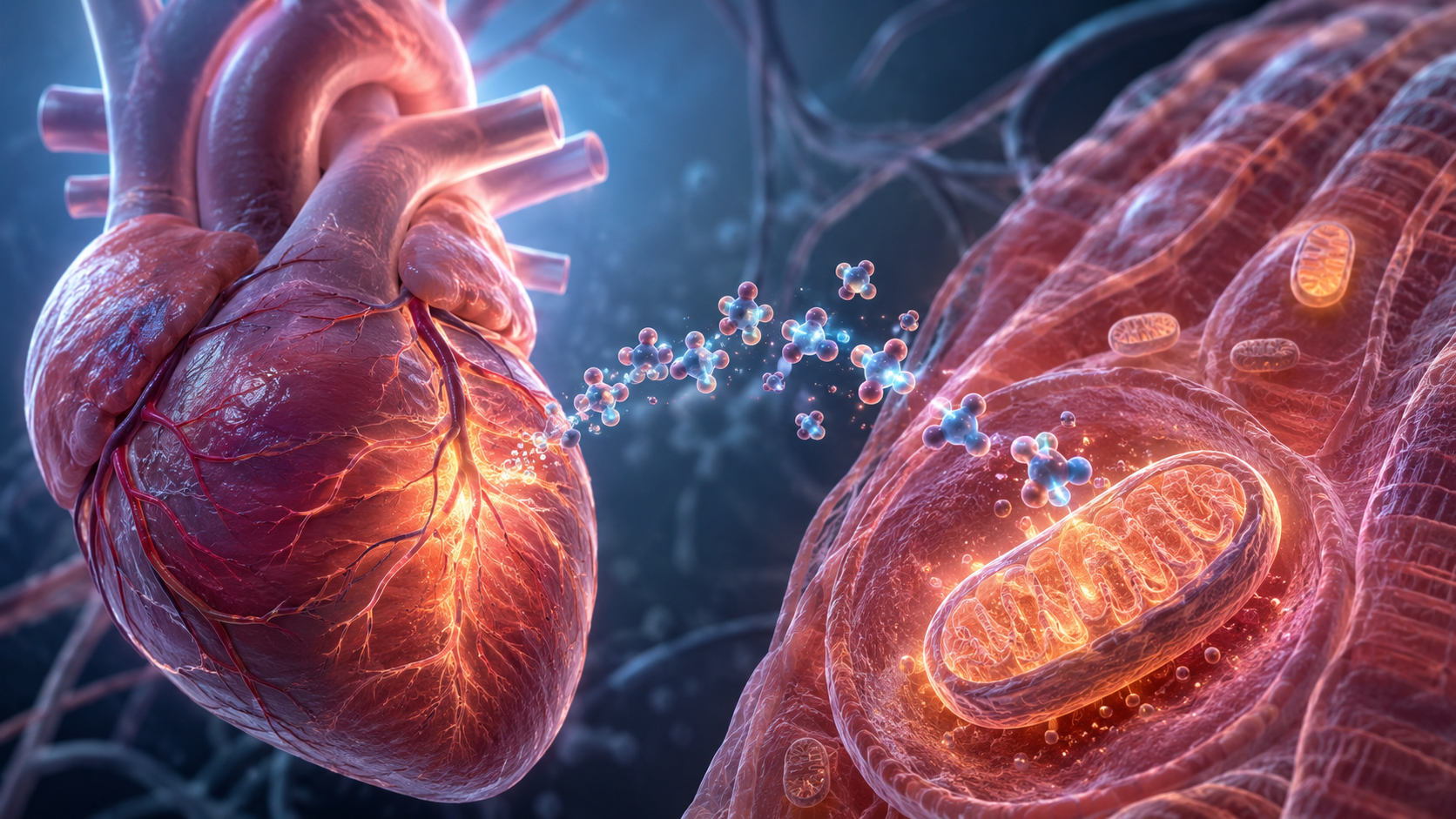
One of the most unsettling discoveries in recent cell biology: mitochondria do not merely produce energy, they send messages straight to the nucleus of the cell. MOTS-c is the messenger. And what it says changes how genes are expressed.
For decades, the cell-biology textbook said roughly the following: the nucleus commands, the other organelles obey. The DNA in the nucleus holds the instructions. The rest of the cell, including the mitochondria, executes. It was a hierarchical, clean, convenient view.
That view was gradually dismantled. And one of the pieces that most shook the hierarchy has a name few outside molecular biology recognize: MOTS-c.
A discovery that ran the flow backwards
In 2018, a study led by Kim and colleagues and published in Cell Metabolism demonstrated something that, in conceptual terms, was almost heretical: when the cell faces metabolic stress, MOTS-c, produced in the mitochondria, moves actively to the nucleus. And there, it begins to regulate gene expression.
Not mitochondrial genes. Nuclear genes. Genes that control the antioxidant response, adaptation to stress, cell survival.
This process has a technical name: mitochondrial retrograde signaling. “Retrograde” because it runs in the opposite direction of the classical flow of biological information, from the mitochondria to the nucleus, not the reverse. It is as if a factory began sending memos to the board of directors, and the board obeyed them.
“Mitochondria are not merely energy factories. They are cellular sensors with a voice of their own, and MOTS-c is one of the ways that voice reaches the DNA.
What MOTS-c does inside the nucleus
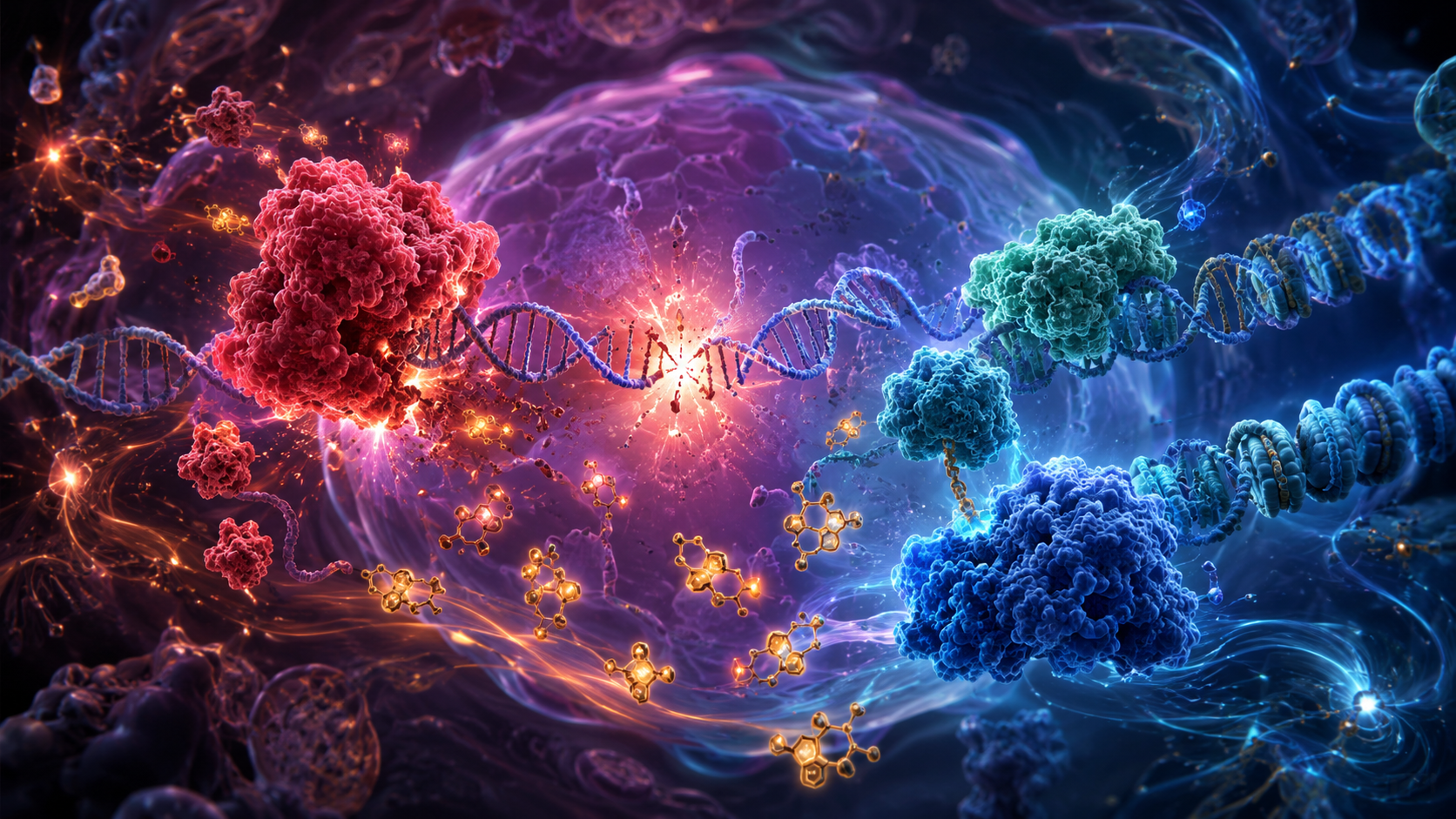
When MOTS-c enters the nucleus, it interacts with a transcription factor called NRF2, one of the most studied molecules in the biology of oxidative stress. NRF2 is the conductor of the cellular antioxidant response: when activated, it triggers dozens of genes responsible for producing protective enzymes.
MOTS-c also regulates genes containing sequences called Antioxidant Response Elements (ARE), as if it held the key to a specific lock in the DNA. When these genes are activated, the cell begins to produce defenses against oxidative damage, adapts its metabolism, and increases its resilience to adverse conditions.
The context in which this translocation occurs is also relevant: under metabolic stress. When energy demand is high, when resources are scarce, when the cell needs to adapt rapidly, it is in these moments that the mitochondria send MOTS-c to the nucleus. It is an emergency response that mobilizes the genetic protection program.
Why this matters beyond the laboratory
The nuclear translocation of MOTS-c is, from a scientific standpoint, one of the most robust and well-documented mechanisms in all of MDP biology. It is not speculation, it was demonstrated in human cells, with imaging and genomics methodology that leaves little room for mechanistic doubt.
What remains open is the magnitude and relevance of this mechanism in whole organisms, especially humans. Cell biology confirms the mechanism. The physiology of the whole organism is still under investigation. This is the current frontier of the field.
But the conceptual implication is already on the table: there is an active channel of communication between the mitochondria and the nuclear genome. And that channel is modulated by concrete biological conditions, exercise, stress, aging. MOTS-c is, as far as current science can say, one of the principal messengers in that channel.
If we confirm in human studies that the nuclear translocation of MOTS-c is as relevant as the cell models suggest, we will be looking at a new class of therapeutic targets that we cannot yet fully name.
The field that was born from this discovery
The publication of the nuclear-translocation study in 2018 was not just another paper. It consolidated a field: the biology of mitokines as agents of intracellular and inter-organ communication. Researchers in longevity, neurology, cardiology, and endocrinology began to observe MOTS-c with renewed interest, not only as a metabolic modulator, but as a mediator of a conversation that takes place inside every cell of the body.
The research group of Changhan Lee and Pinchas Cohen at USC, which leads the MDP field, has described MOTS-c as a component of a biological language still being deciphered, a language the mitochondria developed over billions of years of coevolution with the nuclear genome, and that science is only beginning to read.