The Copper That Builds, how an ancient mineral and three amino acids became an object of research in tissue regeneration
Before it was a chemical symbol in a molecular formula, copper was tools, sculptures, coins. The Egyptians used it to sterilize wounds. Biology took millennia longer to understand why. The answer, when it came, was more elegant than any earlier theory.
A mineral the cell cannot do without
There is a group of enzymes in the human body that simply do not function without copper. It is not just any metabolic dependency, it is structural. Copper is not an additional ingredient of these enzymes: it is part of their active architecture, the point around which the chemical reaction happens.
Lysyl oxidase is one of them. It is the enzyme responsible for the cross-linking of collagen and elastin, the “stitching” process that joins the protein fibers of the extracellular matrix and gives them mechanical strength. Without functioning lysyl oxidase, the tissue you produce is structurally weak. Without copper, lysyl oxidase does not function. The logic is direct.
Another: superoxide dismutase (SOD), the principal intracellular antioxidant enzyme. It neutralizes superoxide radicals, reactive oxygen species that, when accumulated, damage proteins, lipids, and DNA. Copper-dependent SOD is one of the oldest lines of defense in aerobic metabolism. Evolution does not waste effective structures.
And there is also cytochrome c oxidase, a central component of the mitochondrial respiratory chain, the mechanism by which cells produce energy. Copper is a cofactor here too.
Copper is not at the periphery of cellular biochemistry. It is at the center of the three functions that matter most for tissue integrity: structural construction, antioxidant defense, and energy production.
The problem: how to deliver copper without poisoning
If copper is so essential, why not simply supplement copper? The answer is the same that applies to practically any transition metal in biology: the difference between essential cofactor and toxin lies in the dose, the form, and the context of delivery.
Free copper, uncoordinated Cu²⁺ ions, is pro-oxidant. In uncontrolled concentrations, it catalyzes the generation of the same free radicals SOD was designed to eliminate. Biology solved this problem over hundreds of millions of years by developing specific transporter proteins: ceruloplasmin, albumin, metallothioneins. Copper circulates in the blood almost entirely bound to proteins, never free.
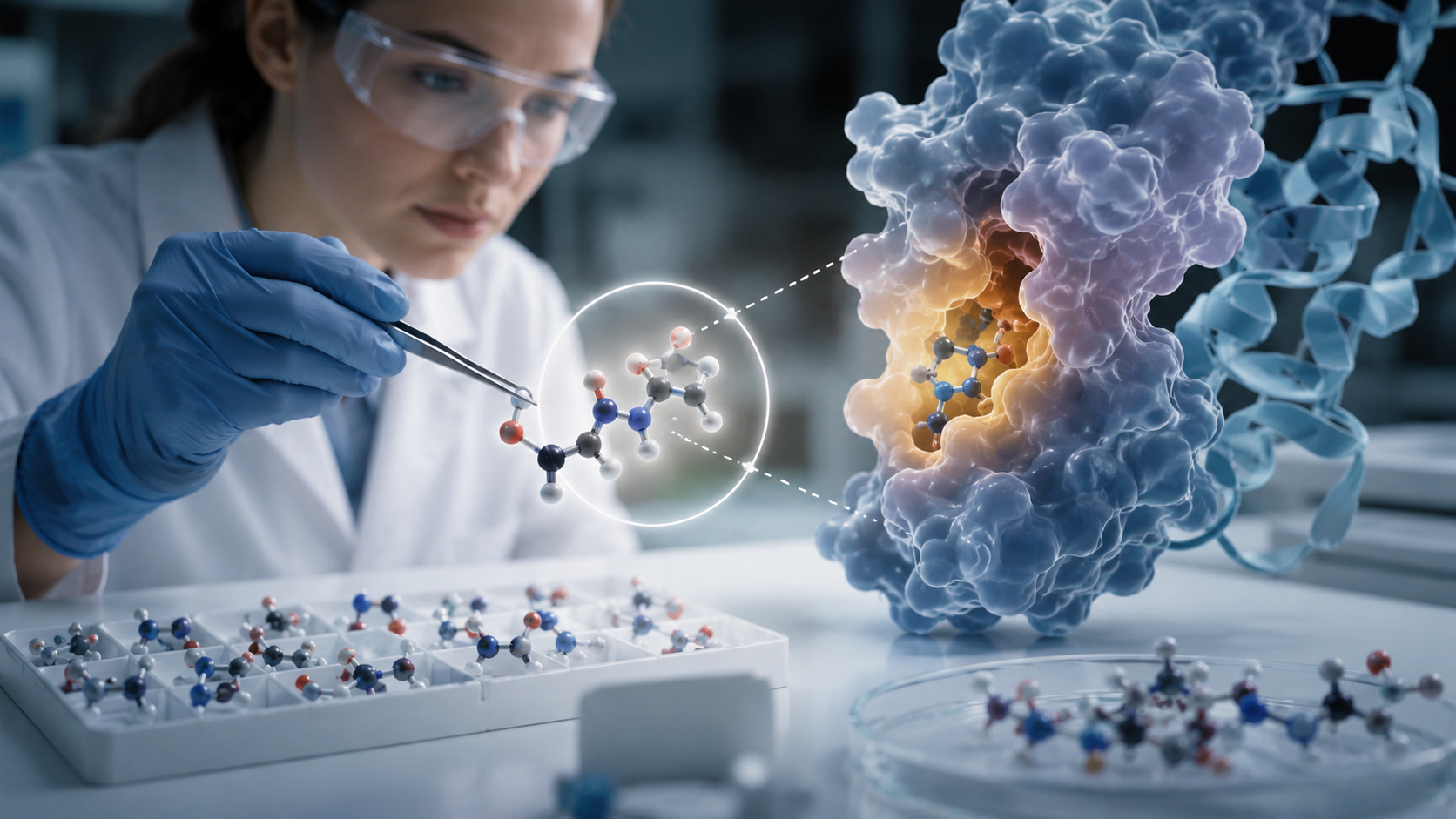
It is in this context that GHK-Cu becomes biochemically relevant. The GHK tripeptide has a natural affinity for the Cu²⁺ ion, chelating the metal with structural precision, forming a stable complex that is at once bioavailable and controlled. The hypothesis investigated in the literature is that this complex functions as a physiological vehicle: it carries copper to the cells that need it, releases it in the intracellular environment for enzymatic use, and avoids the accumulation of the free ion that would generate oxidative stress.
Evidence in cell models suggests the GHK-Cu complex may be internalized via the LRP-1 receptor, an endocytosis protein present in fibroblasts, keratinocytes, and endothelial cells. Inside the cell, the complex dissociates: the copper goes to the enzymes that need it; the free GHK peptide follows signaling pathways of its own.
What happens when copper reaches the right place
In healing studies, the effect of GHK-Cu on dermal fibroblasts is one of the most replicated data points in the literature on the compound. In in vitro models, cells treated with the complex demonstrate increased synthesis of type I and III collagen, increased elastin production, and greater deposition of glycosaminoglycans, the principal structural macromolecules of skin and connective tissues.
The mechanism connecting GHK-Cu to these effects passes through lysyl oxidase: more available copper means more enzymatic activity to cross-link the newly produced fibers. A tissue with well-cross-linked collagen fibers is mechanically resistant. A tissue with poorly cross-linked collagen, which happens in copper deficiency, for example, is fragile, inelastic, and slow to heal.
In animal healing models, researchers documented faster wound contraction, greater granular-tissue formation, and increased vascular density at injury sites treated with GHK-Cu. The data in animals are consistent. The transition to clinical protocols in humans is the next frontier.
In models of aged skin, dermal fibroblasts from older donors cultured in vitro, GHK-Cu demonstrated the capacity to partially reverse some gene-expression patterns associated with cellular aging. This does not mean the molecule “rejuvenates” tissue in the sense the cosmetic market would love to claim. It means that, under controlled experimental conditions, it interferes with molecular pathways that differentiate a young cell from an aged one.
The difference between those two statements is enormous. And it is precisely why rigorous science matters: it replaces enthusiasm with precision, without losing the capacity to see where the investigation might lead.
The hypothesis copper biochemistry suggests for the future
If GHK-Cu functions as a physiological vehicle of copper for cells that depend on copper-dependent enzymes to maintain tissue integrity, and if the levels of this complex fall with age precisely when the activity of these enzymes diminishes, then a research hypothesis forms naturally:
Part of the regenerative decline associated with aging may be related not only to the loss of intrinsic cellular capacity, but to the reduction in the availability of essential enzymatic cofactors, and GHK-Cu would be one of the mechanisms by which the young organism delivers them efficiently.
If this hypothesis is confirmed in well-controlled clinical studies, the implications for research in regenerative medicine are substantial. Not because GHK-Cu would be a medicine, the regulatory path for that is long and demanding, as it should be. But because understanding precisely how copper circulates, how it is delivered to cells, and how that delivery changes with age is fundamental knowledge for any therapeutic strategy that aims to intervene in this process.
The question is not “does copper cure?” The question is: “how does biology use copper to build, repair, and maintain, and what happens when this system loses efficiency?” GHK-Cu is one of the tools science uses to answer it.