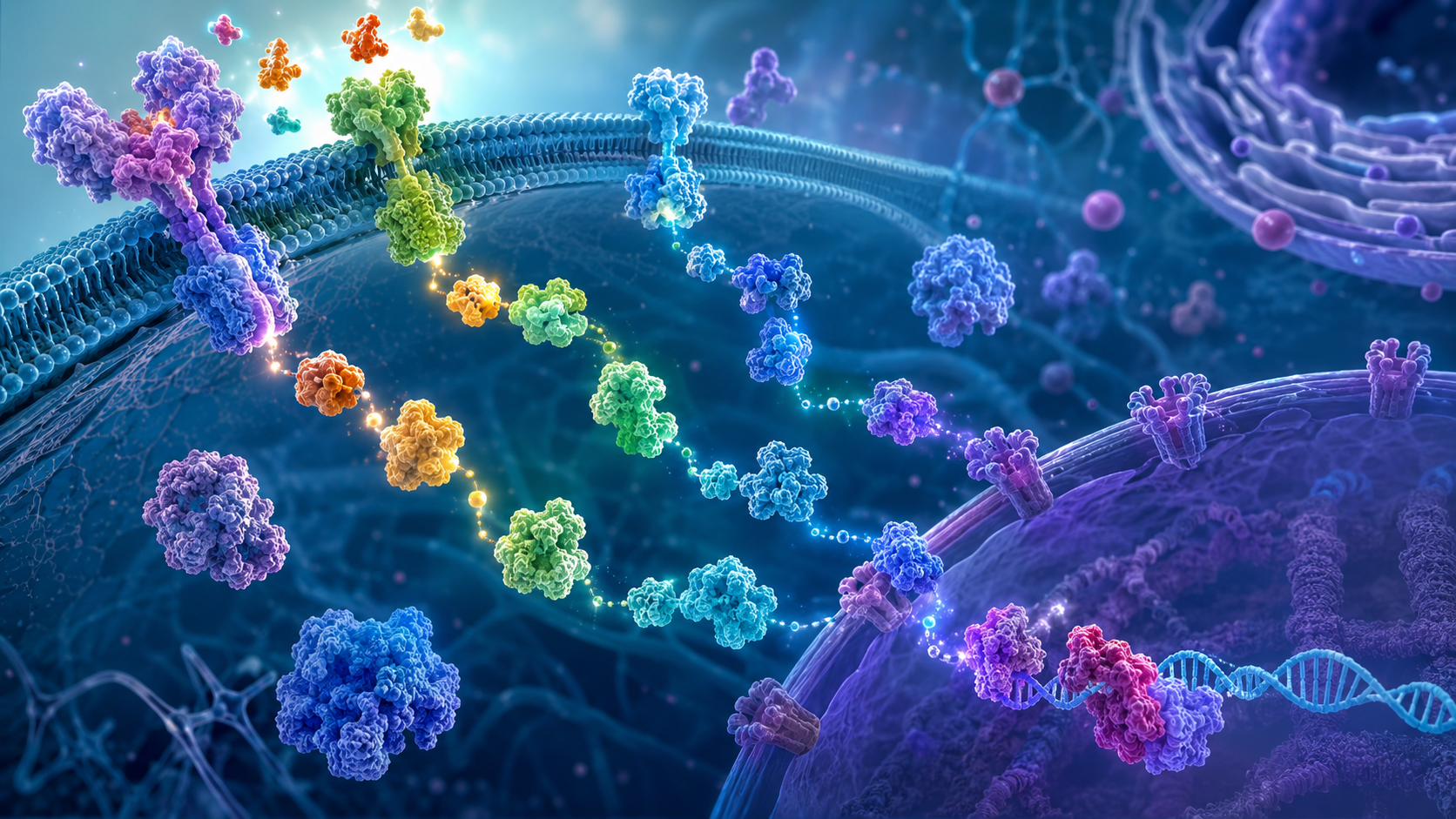
Growth hormone is not secreted constantly throughout the day. It is released in discrete bursts, peaks that rise abruptly, last minutes, and then plummet before the next wave arrives. Between the pulses, blood levels are practically undetectable. It is a rhythm. A language in Morse code that the hypothalamus and pituitary use to communicate with the rest of the body.
Researchers call this pulsatile secretion. And over the past three decades, they have accumulated evidence that this rhythm, the frequency, amplitude, and timing of the pulses, matters as much as the total volume of GH produced.
Disturb the rhythm, and you disturb the message.
GH is not a hormone the body releases in continuous mode. It is a pulsatile language, and like any language, the structure matters as much as the content.
Why Pulses, and Not Continuous Flow?
The question seems simple, but the answer reveals something profound about the architecture of biological systems.
If the goal is to activate the GH receptors in target tissues, why not simply maintain a constant concentration of the hormone in the blood? Why did the body invest in all the sophistication of a pulsatile system, with the hypothalamus producing GHRH in waves, controlled by inhibitory somatostatin, synchronized with sleep, with exercise, with fasting?
The answer lies in receptor biology. Receptors continuously exposed to the same signal tend to desensitize, a cellular protection mechanism called downregulation. The receptor perceives excessive stimulation and begins to internalize, to reduce its presence in the membrane. With pulses, this does not happen: the interval between each GH peak gives enough time for the receptors to recover, to resensitize, and to be ready to respond to the next wave.
It is an elegant solution to a fundamental problem of biological communication. And it is part of the reason researchers investigate, with such interest, whether GHRH analogs like Modified GRF (1-29) are capable of preserving that pattern, or whether they disturb it.
The Experiment That Changed the Perspective
In 2006, Madalina Ionescu and Lawrence Frohman published in the Journal of Clinical Endocrinology & Metabolism a study that became a reference in the field: they collected blood samples from healthy men every 20 minutes for 12 continuous hours, before and after the administration of the CJC-1295 analog.
What they found was unexpected, or at least, more nuanced than expected.
GH pulsatility was not abolished. The pulses continued. The frequency and amplitude of the individual peaks were not significantly altered. What changed were the basal levels between the pulses: the so-called GH nadirs, the lowest points between each wave, rose 7.5-fold relative to baseline. The overall mean level of GH rose 46%. And IGF-1 levels, the growth factor produced by the liver in response to GH, increased 45%.
In other words: the rhythm was preserved. The amplitude of the system was raised. CJC-1295 did not transform pulsatile secretion into continuous secretion, it amplified the signal without destroying the structure.
What This Has to Do with Aging
As we age, the GH axis goes through a series of changes. The amplitude of the pulses decreases. Total GH production falls. IGF-1 levels, which GH stimulates in the liver, decline progressively. This process, called somatopause, begins as early as the third or fourth decade of life and advances steadily.
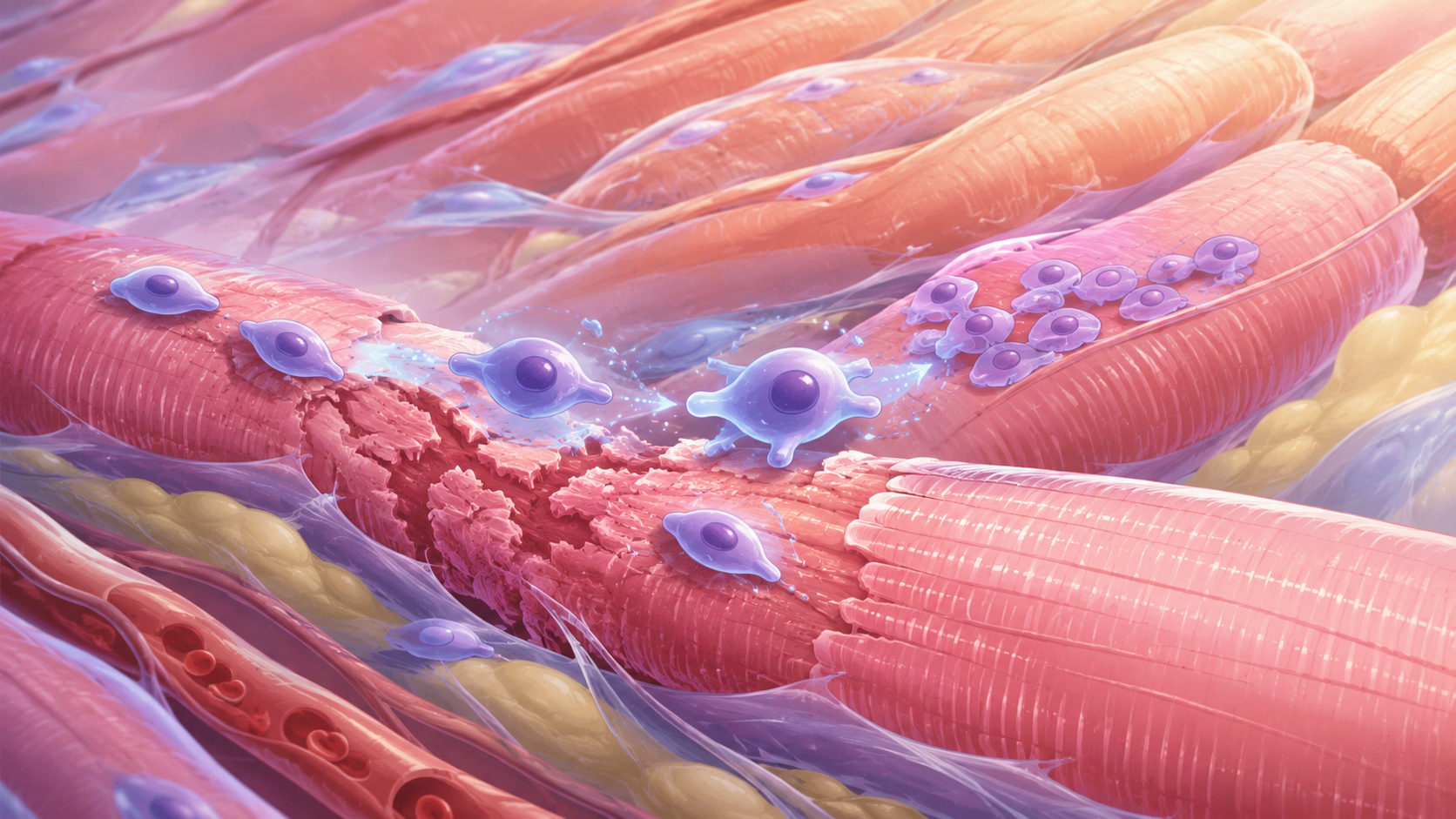
What research investigates, still without definitive conclusions, but with clear directions, is how much this decline contributes to the changes associated with aging: increased visceral fat, reduced lean mass, worsened tissue recovery, alterations in the lipid profile.
And here is the hypothesis that moves the field: if part of biological aging is mediated by the decline of the pulsatile GH axis, then understanding how to stimulate that axis in a way that preserves the physiological rhythm, instead of simply raising the hormone in a crude, continuous manner, may be one of the most relevant questions of aging biology.
Modified GRF (1-29), by its intermediate half-life of approximately 30 minutes, occupies a peculiar research space in this context. It is stable enough to be a reliable experimental tool. It is ephemeral enough that its stimulation pulses are discrete, and therefore potentially compatible with the rhythmic pattern that biology seems to prefer.
The question is not just how much GH, it is how. Research on pulsatility suggests that the temporal structure of secretion may be as important as the total volume produced.
An Open Frontier
There are no definitive answers yet. The science of GHRH analogs and GH pulsatility is a field under construction, with robust preclinical evidence, promising early clinical studies for the DAC version, and a significant data gap for the No DAC version specifically.
But the research direction is clear, and, for those following the field, exciting. The combination of increasingly precise experimental tools, animal models that allow specific variables to be isolated, and increasingly sophisticated proteomic and metabolomic analysis methods creates the conditions for the questions about pulsatility, the GH axis, and aging to begin receiving more definitive answers in the coming years.
And when that happens, Modified GRF (1-29), with its carefully calibrated half-life, its enzymatic resistance built amino acid by amino acid, will be among the tools that made the questions possible.
Sometimes, the most important contribution of science is not the answer. It is the tool that allows the right question to be asked.
References: Ionescu & Frohman, J Clin Endocrinol Metab 2006; Teichman et al., J Clin Endocrinol Metab 2006; Alba et al., Am J Physiol Endocrinol Metab 2006.