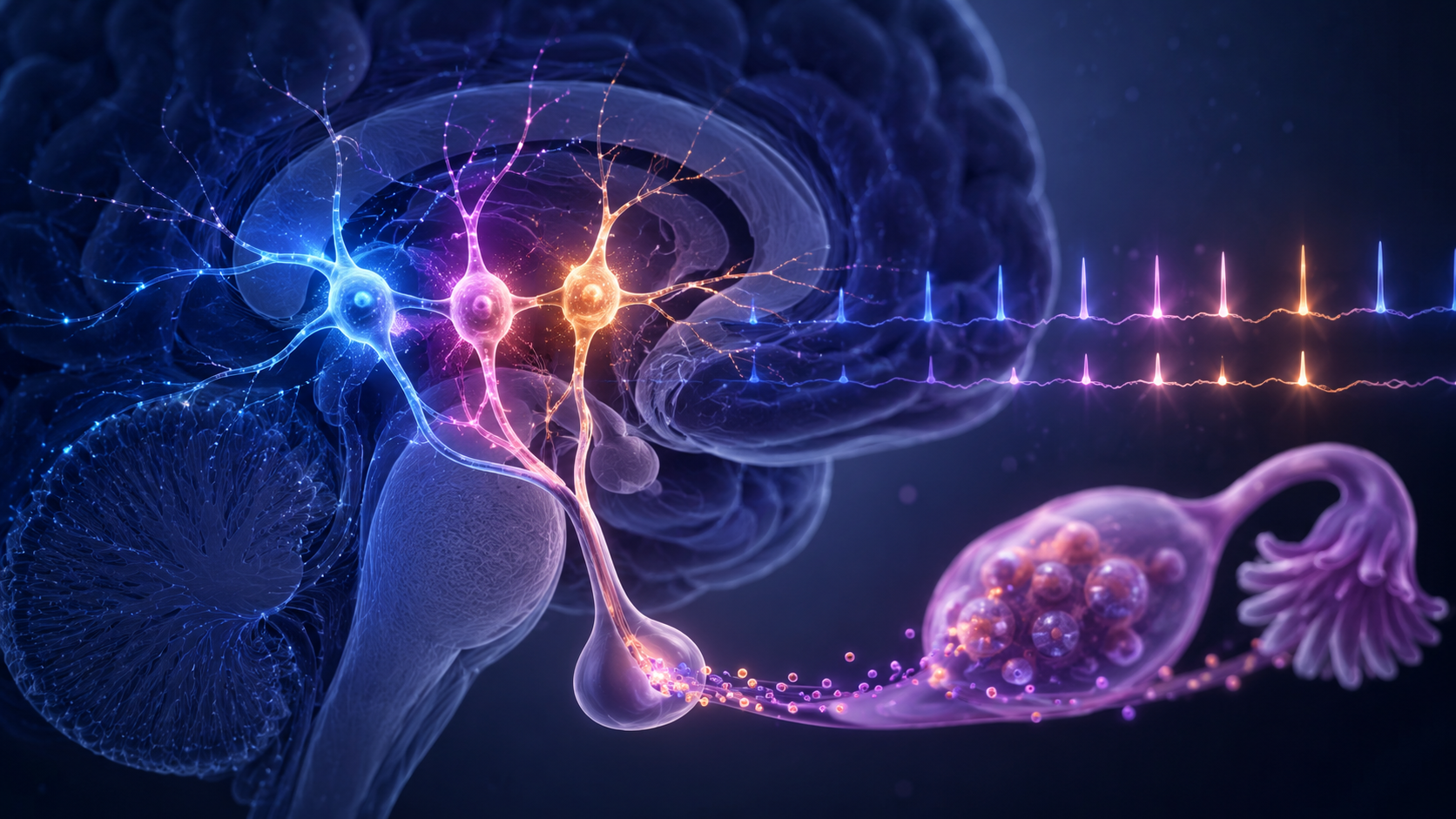
For a long time, medicine treated the lack of sexual desire as a problem that was above all psychological, something to be resolved in therapy, in conversation, in the relationship. Not that this perspective is wrong. But it always left one question without a satisfactory answer: what happens, exactly, in the brain of someone who has lost sexual interest? Where, biologically, does that signal fail?
A series of studies published between 2022 and 2023 in JAMA Network Open, one of the most respected medical journals in the world, used a different approach to attack this question. The researchers, led by Alexander Comninos at Imperial College London, recruited volunteers diagnosed with HSDD (Hypoactive Sexual Desire Disorder) and administered kisspeptin by intravenous infusion. Then, they placed these volunteers inside a functional magnetic resonance scanner, a device capable of measuring, with millimetric precision, which regions of the brain are active at a given moment.
Next, they showed them images: some sexually evocative, others neutral.
What the scans revealed was a measurable modulation in the way the brain processed the stimuli. In women who received kisspeptin, not placebo, there were changes in the activity of regions associated with reward and motivation processing, including the hippocampus. In men, besides the brain changes, the researchers observed physiological responses that were not present in the placebo group.
It is important to be precise about what these studies show, and what they do not show. They do not prove that kisspeptin “treats” HSDD. They are Phase II trials, with small groups, of short duration. No regulatory body has approved kisspeptin for therapeutic use. What these studies demonstrate is something more specific, and perhaps more profound: that there is an identifiable biological pathway that connects this molecule to the brain processing of desire. That sexual desire has, literally, a neurological address that can be studied with measuring instruments.
For research on sexual dysfunction, this is a significant shift in perspective. Historically, the area suffered from the absence of objective biomarkers, ways to measure, in biology, what the patient describes subjectively. The fMRI studies with kisspeptin are a step toward a neurobiology of desire that may, in the future, inform more precise investigative approaches.
Kisspeptin is not an answer. It is a research tool that is helping to formulate better questions. And sometimes, in science, that is the most valuable contribution.
Editorial note. Kisspeptin is an RUO (Research Use Only) peptide compound, available on the Axion Biotech platform exclusively for controlled scientific research. No therapeutic claim is made or implied. Not approved for human or veterinary use by any regulatory body.