CJC-1295 + Ipamorelin
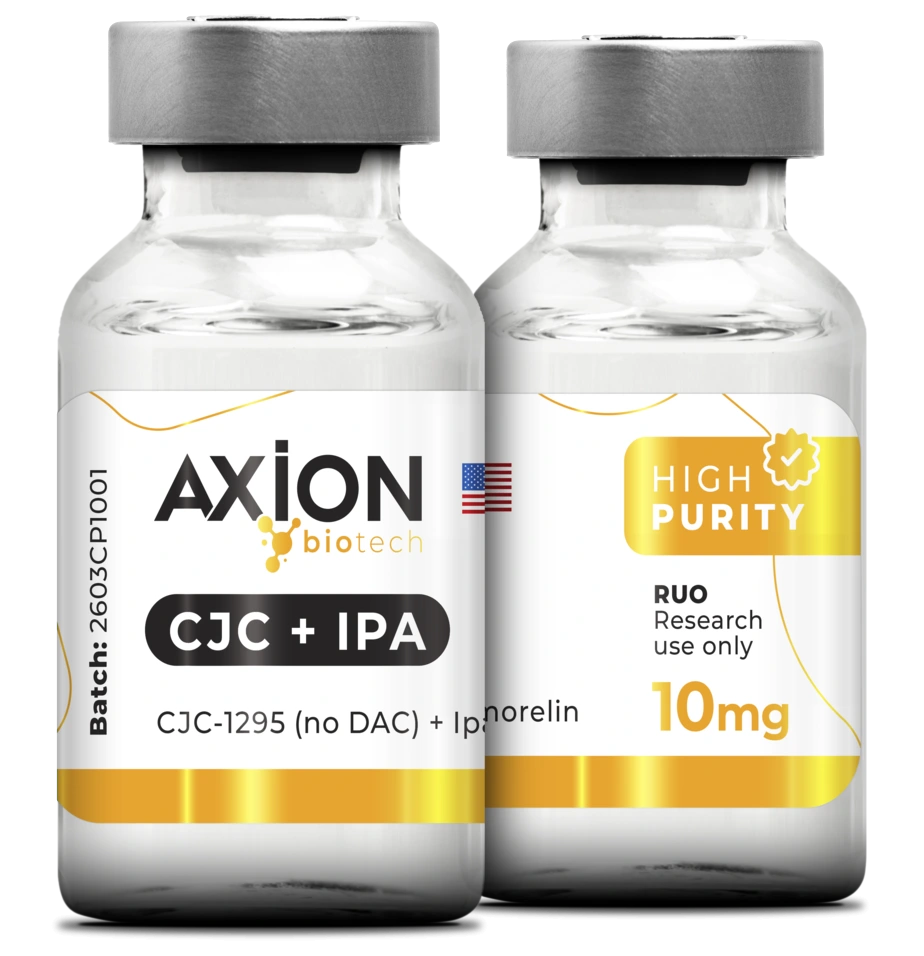
Access to the catalog is structured — not open by default.
-
SystemGH Axis System
-
TypeTwo-peptide blend — dual-receptor design
-
ComponentsCJC-1295 (No DAC) │ Ipamorelin
-
CJC-1295 (No DAC)Modified GRF (1-29) — 29 aa — C152H252N44O42 — ~3,368 Da — half-life ~30 min
-
IpamorelinPentapeptide — Aib-His-D-2-Nal-D-Phe-Lys-NH₂ — ~711.85 Da
-
FormLyophilized vial
-
StatusActive
-
Blend studiesNot available in current indexed literature

CJC-1295 + Ipamorelin Overview
The GH axis is regulated by competing signals. Hypothalamic GHRH stimulates GH release; somatostatin inhibits it. The result is the pulsatile secretion pattern that characterizes normal GH physiology, brief surges, discrete intervals, a rhythm the research literature has spent decades attempting to map and modulate.
CJC-1295 (No DAC) and Ipamorelin act on this axis at two distinct receptors, through two distinct intracellular pathways. CJC-1295 (No DAC) is a GHRH analog: it binds the GHRH receptor on anterior pituitary somatotrophs and activates the Gs/cAMP/PKA cascade, driving GH gene transcription and vesicle preparation. Ipamorelin is a selective GHS-R1a agonist: it binds the ghrelin receptor on the same somatotrophs and activates a parallel Gq/11 pathway, triggering intracellular calcium release and acute GH exocytosis.
Two receptors. Two signaling cascades. No mechanistic overlap at the primary pathway level. This is the blend in AXION’s portfolio with the deepest individual component literature, including published clinical studies in humans for both compounds.
The hypothalamic-pituitary GH axis is among the most studied endocrine systems in biomedical research. Its core logic is straightforward: the hypothalamus releases GHRH, which signals the anterior pituitary to produce and release GH; the pituitary also receives somatostatin, the inhibitory counterpart, creating the on/off oscillation that produces physiological pulsatility. GH then acts on the liver and peripheral tissues, driving IGF-1 production and its downstream anabolic and metabolic effects.
CJC-1295 (No DAC) and Ipamorelin are two of the most mechanistically characterized secretagogues in the literature. Together, they activate the two major non-redundant stimulatory inputs to GH release.

CJC-1295 + Ipamorelin Research Directions
Organized by compound — each body of evidence belongs to the individual peptide, not to the blend as a unit.
- CJC-1295 (No DAC) — Modified GRF (1-29):
- GH/IGF-1 axis pharmacology — characterization of GHRH-R agonism, cAMP/PKA signaling cascade, and downstream GH secretion in anterior pituitary models
- Pulsatile GH secretion — investigation of whether GHRH-R stimulation preserves or alters the physiological pulsatile pattern (Ionescu & Frohman, 2006)
- GH deficiency models — animal studies in GHRH knockout mice investigating restoration of growth, body composition, and somatotroph expansion
- Serum proteomics — identification of biomarkers associated with GH/IGF-1 axis activation; relevant for GH detection research
- Enzyme stability research — the four amino acid substitutions as a model of rational peptide design for DPP-IV resistance
- Ipamorelin:
- GHS-R1a pharmacology — ipamorelin as the first selective GH secretagogue: GH release without ACTH, cortisol, prolactin, or TSH elevation (Raun et al., 1998)
- Pulsatile GH release — acute, discrete GH pulse profile; PK/PD modeling in human volunteers (Gobburu et al., 1999)
- Bone mineral density — preclinical investigation in normal and glucocorticoid-treated rat models (Johansen et al., 1999; Andersen et al., 2001)
- GI motility — GHS-R1a expression in the GI tract; ipamorelin as a ghrelin mimetic in postoperative ileus models
Body composition in catabolic states — preclinical GH secretagogue effects on lean mass and adipose in cachexia and aging models - Somatostatin antagonism — partial inhibition of somatostatin’s inhibitory action, contributing to net GH output
GHRH-R → Gs → cAMP → PKA → GH gene transcription + vesicle preparation
GHS-R1a → Gq/11 → PLC-β → Ca²⁺ → GH vesicle exocytosis
None at the primary receptor/cascade level
Ipamorelin partially antagonizes somatostatin — the physiological brake on GH release. CJC-1295 acts on the stimulatory arm. Together: stimulatory input from two receptors + reduced inhibitory tone.
Individual components: documented in peer-reviewed literature including clinical studies. Combined: no dedicated published study as of April 2026.

CJC-1295 + Ipamorelin Quality & Traceability
Every AXION compound is subject to analytical verification before release. Purity and traceability are not marketing attributes — they are part of the integrity of the research itself.
-
Certificate of Analysis
Available per lot on request. Issued per component.
-
Lot Traceability
Each vial carries a unique lot number linked to its full analytical record.
-
QR Verification
QR code links directly to the COA for that specific lot.
-
HPLC Verified
CJC-1295: ≥99% / Ipamorelin: >98% per lot. HPLC + Mass Spectrometry.
-
Blend composition
Component ratios available in Product Access upon authorization.
Learn more about our verification process: Quality & Testing

Related Compounds Compounds in the GH Axis System
All compounds below belong to the same biological system as CJC-1295 + Ipamorelin. Each is supplied as an RUO research compound.
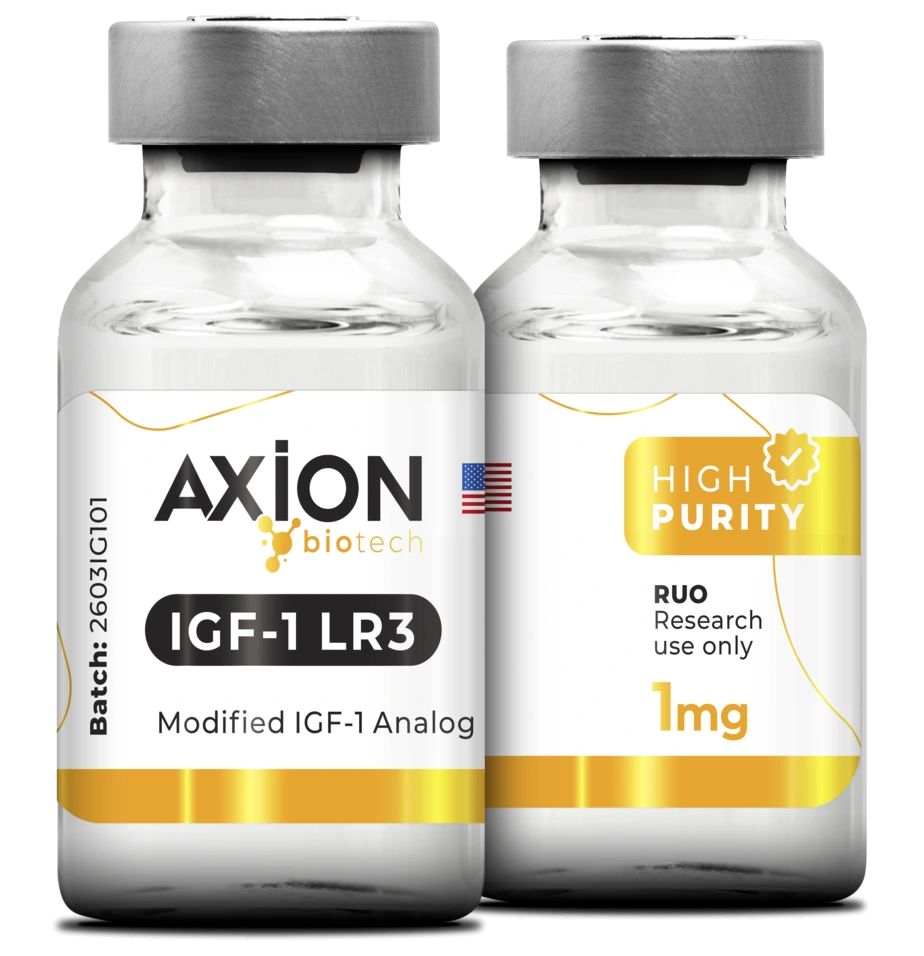
IGF-1 LR3
IGF-1 LR3 is a synthetic analogue of human Insulin-like Growth Factor 1, engineered with two structural modifications that substantially alter its pharmacodynamic profile relative to the native molecule. A substitution…
View molecule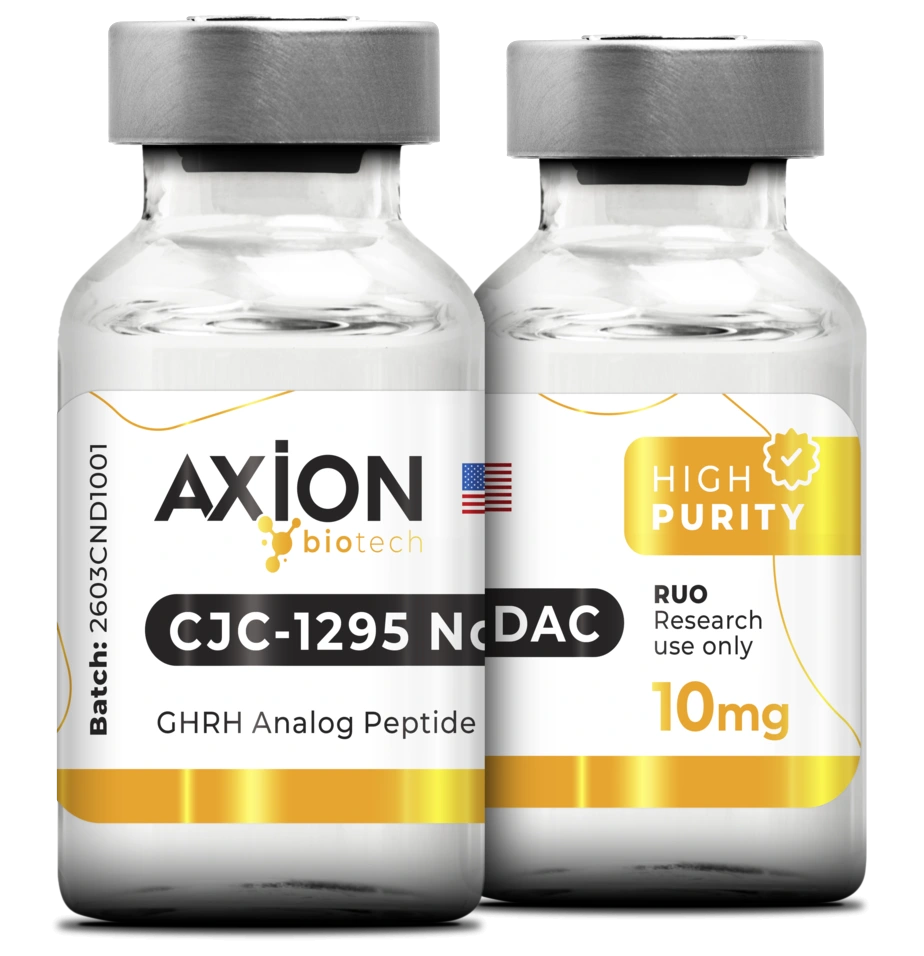
CJC-1295 (No DAC)
CJC-1295 (No DAC), formally designated Modified GRF (1-29), is a synthetic 29-amino acid analog of Growth Hormone-Releasing Hormone (GHRH), engineered with four strategic amino acid substitutions to confer enzymatic stability…
View molecule
Related Articles - Research Library Explore the Science Behind This System
The Research Library provides in-depth editorial coverage of the mechanisms, evidence, and investigative directions relevant to this system. Each article connects to one or more related compounds in the AXION catalog.
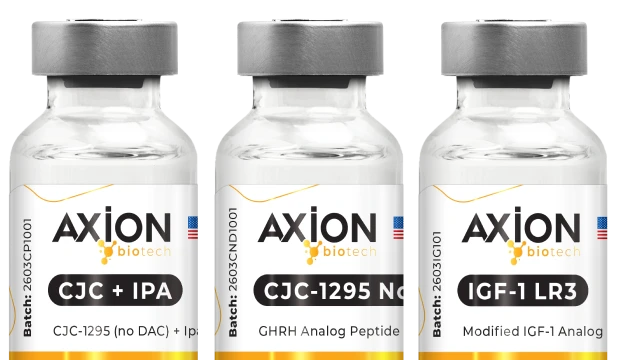
The CJC-1295 + Ipamorelin Blend is supplied by AXION Biotech exclusively for research purposes. Neither component is approved by the FDA, ANVISA, or any regulatory agency for human or veterinary use. No therapeutic claims are made or implied. All scientific data referenced on this page derives from preclinical (animal / in vitro) or clinical pharmacokinetic studies unless explicitly stated otherwise.