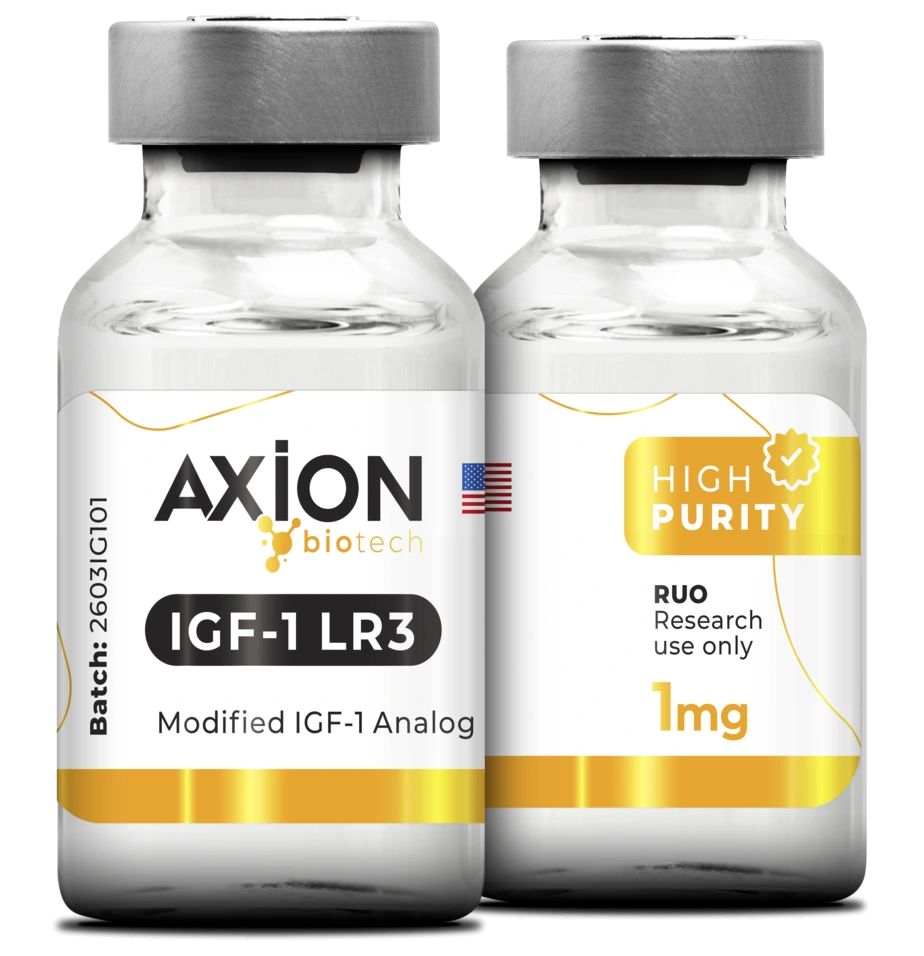
IGF-1 LR3
Access to the catalog is structured — not open by default.
-
SystemGH Axis System
-
TypeSynthetic peptide — IGF-1 analogue — 83 amino acids
-
SynonymsIGF-1 LR3 | LR3-IGF-1 | Long R3 IGF-I | Long Arg3-IGF-I
-
FormulaC400H625N111O115S9
-
Mol. weight~9,117 Da
-
FormLyophilized powder (vial)
-
Purity>98% by HPLC
-
StatusActive

IGF-1 LR3 Overview
IGF-1 LR3 is a synthetic analogue of human Insulin-like Growth Factor 1, engineered with two structural modifications that substantially alter its pharmacodynamic profile relative to the native molecule. A substitution of glutamic acid for arginine at position 3, giving the compound its ‘LR3’ designation, combined with a 13-amino acid N-terminal extension (MFPAMPLLSLFVN) produces an 83-residue peptide with a molecular weight of approximately 9,117 Da. It belongs to AXION’s GH Axis System, the research compound cluster organized around the growth hormone signaling cascade and its downstream mediators.
The primary pharmacodynamic distinction of IGF-1 LR3 lies in its dramatically reduced affinity for Insulin-like Growth Factor Binding Proteins (IGFBPs). Native IGF-1 circulates predominantly in a protein-bound state; the IGFBPs regulate its bioavailability and half-life. IGF-1 LR3 presents an approximately 1000-fold reduction in IGFBP binding affinity, resulting in a significantly higher free fraction and an extended half-life estimated at 20-30 hours in animal models, compared to 12-15 hours for the native molecule. This property makes it a useful tool for isolating IGF-1 receptor (IGF-1R) signaling in experimental contexts without the confounding variable of endogenous binding protein regulation.
The compound preserves full agonist activity at IGF-1R, the transmembrane tyrosine-kinase receptor responsible for initiating the PI3K/Akt/mTOR and MAPK signaling cascades. IGF-1 LR3 is classified exclusively as Research Use Only (RUO). No therapeutic application in humans has been approved by any regulatory authority.


IGF-1 LR3 Research Directions
The published literature on IGF-1 LR3 spans multiple biological contexts, predominantly in in vitro and preclinical animal models. Below is an overview of the principal research areas documented in the scientific literature.
- Skeletal muscle biology — proliferation and differentiation of myogenic satellite cells, hypertrophy and atrophy mechanisms, sarcopenia models in rodents
- Neurobiology — neuroprotection, synaptic plasticity, and neurodegenerative disease models (including 5XFAD transgenic mouse models of Alzheimer pathology)
- Metabolic research — interactions with insulin signaling pathways, glucose uptake in adipocytes and muscle cells
Experimental oncology — role of IGF-1R signaling in tumor cell proliferation and survival - Aging and tissue function research — GH/IGF-1 axis decline associated with age-related muscle mass loss
IGF-1R pathway isolation tool — reduced IGFBP affinity allows researchers to study downstream IGF-1R effects without endogenous binding protein interference
Primary anabolic signaling cascade initiated upon IGF-1R activation. Substrate phosphorylation via IRS-1/2 triggers PI3K, leading to Akt activation and mTORC1-mediated protein synthesis regulation — including p70S6K and 4E-BP1 phosphorylation.
mTORC1 activation by Akt regulates ribosomal protein synthesis via p70S6K phosphorylation. Investigated in the context of muscle cell hypertrophy and protein anabolism in preclinical models.
Downstream Akt targets modulating glycogen synthesis (via GSK3β inhibition) and transcription of atrophy-related genes including atrogenes MuRF1 and MAFbx (via FOXO1/3 suppression).
Parallel signaling cascade associated with cell proliferation and differentiation. ERK activation in response to IGF-1R stimulation observed in muscle and neural cell models.
Structural modifications (Arg3 substitution + N-terminal extension) reduce IGFBP binding affinity ~1000-fold. This elevates the bioavailable free fraction and extends effective half-life to ~20–30h in animal models, making IGF-1 LR3 a useful tool for prolonged IGF-1R stimulation experiments.

IGF-1 LR3 Quality & Traceability
Every AXION compound is subject to analytical verification before release. Purity and traceability are not marketing attributes — they are part of the integrity of the research itself.
-
Certificate of Analysis
Available per lot on request.
-
Lot Traceability
Each vial carries a unique lot number linked to its full analytical record.
-
QR Verification
QR code on packaging links directly to the COA for that specific lot.
-
HPLC Verified
>98% purity per lot. Verified by RP-HPLC + Mass Spectrometry (identity confirmation).
Learn more about our verification process: Quality & Testing

Related Compounds Compounds in the GH Axis System
All compounds below belong to the same biological system as IGF-1 LR3. Each is supplied as an RUO research compound.
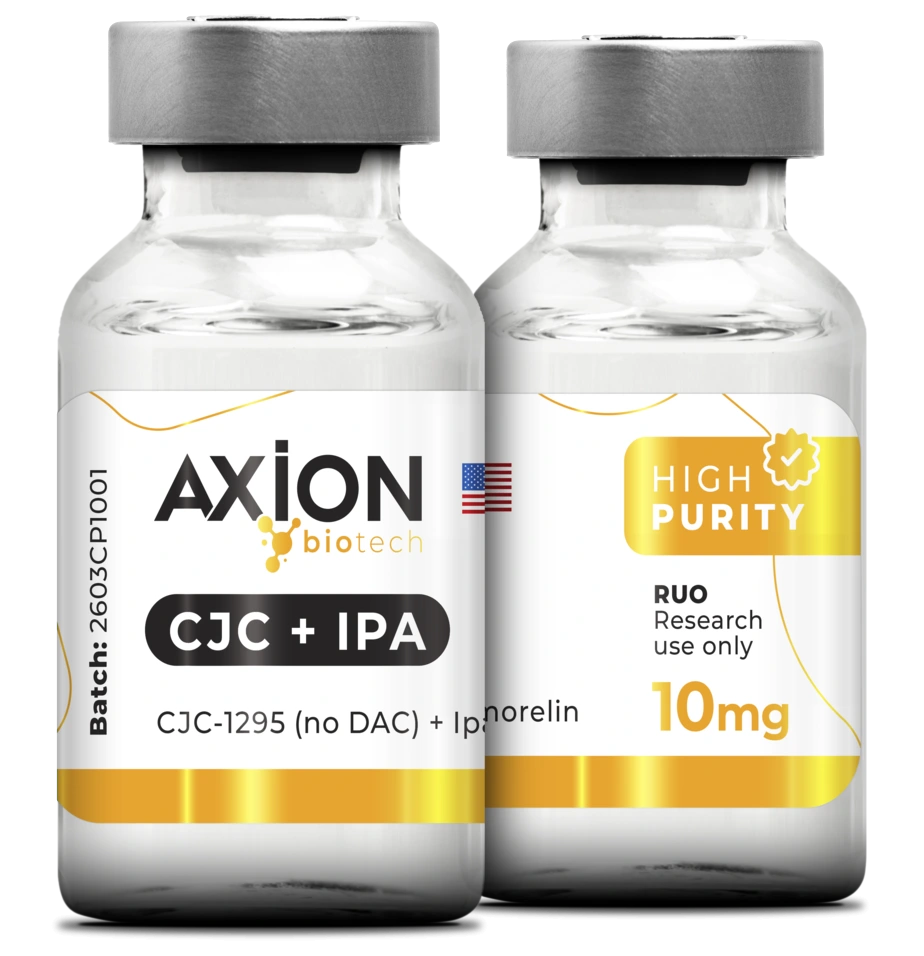
CJC-1295 + Ipamorelin
The GH axis is regulated by competing signals. Hypothalamic GHRH stimulates GH release; somatostatin inhibits it. The result is the pulsatile secretion pattern that characterizes normal GH physiology, brief surges,…
View molecule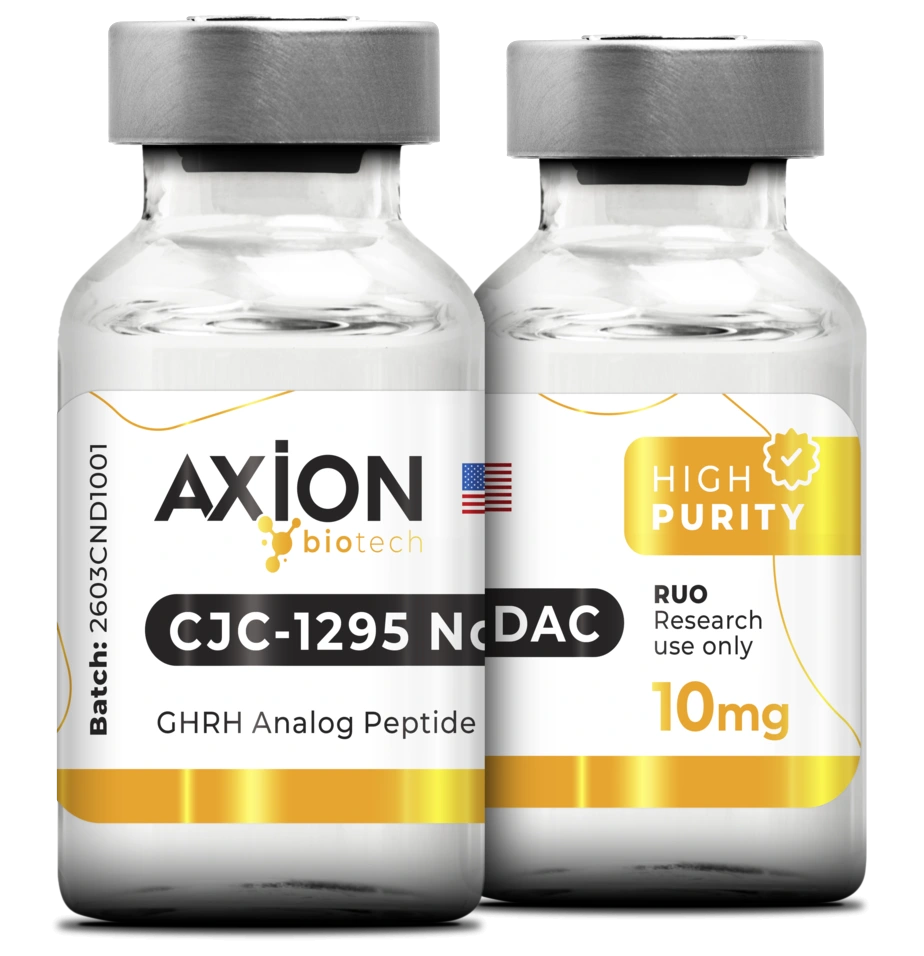
CJC-1295 (No DAC)
CJC-1295 (No DAC), formally designated Modified GRF (1-29), is a synthetic 29-amino acid analog of Growth Hormone-Releasing Hormone (GHRH), engineered with four strategic amino acid substitutions to confer enzymatic stability…
View molecule
Related Articles - Research Library Explore the Science Behind This System
The Research Library provides in-depth editorial coverage of the mechanisms, evidence, and investigative directions relevant to this system. Each article connects to one or more related compounds in the AXION catalog.
IGF-1 LR3 is supplied by AXION Biotech exclusively for research purposes. This compound is not approved by the FDA, ANVISA, or any regulatory agency for human or veterinary use. No therapeutic claims are made or implied. All scientific data referenced on this page derives from preclinical (animal / in vitro) models unless explicitly stated otherwise.