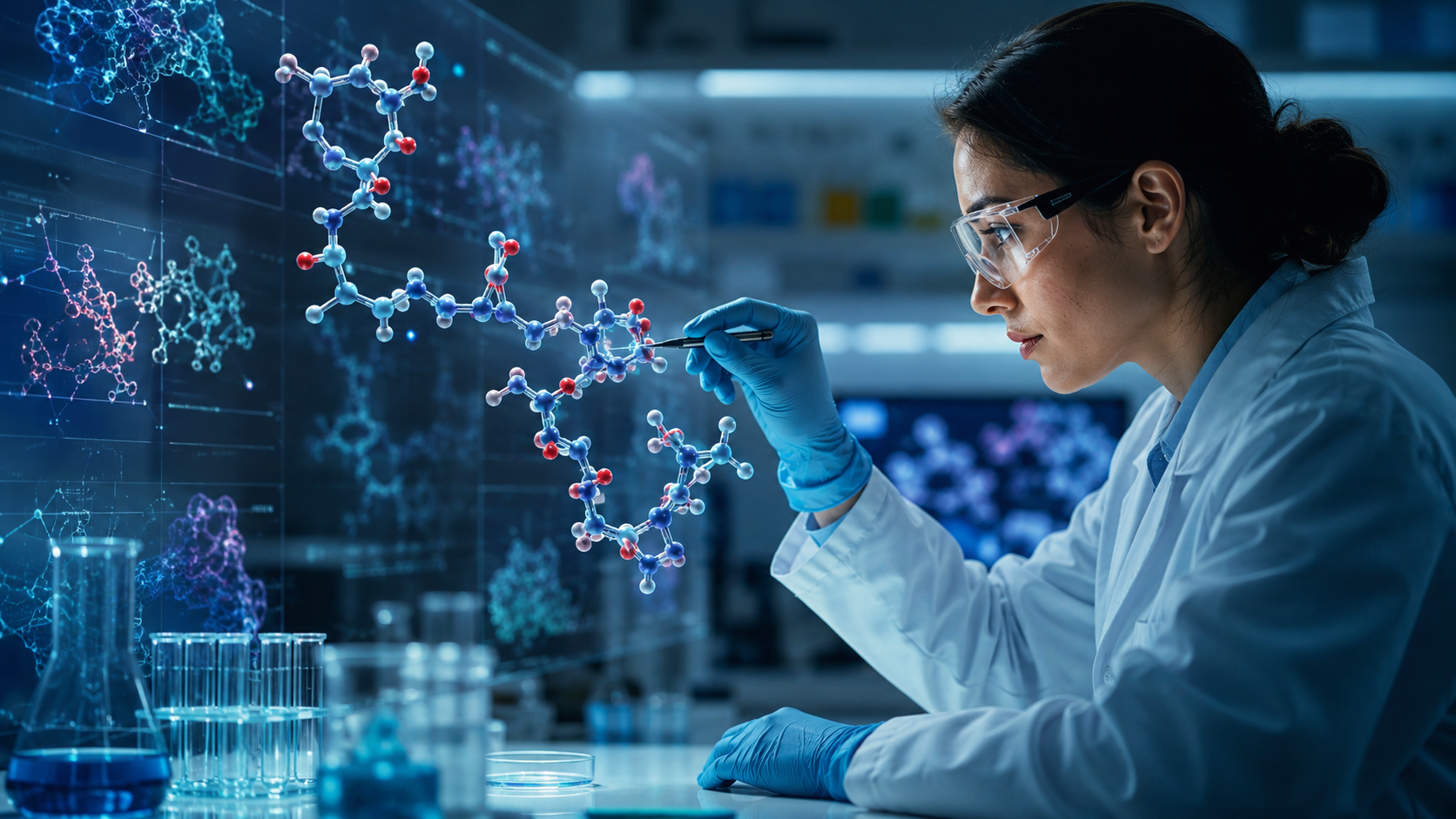
The progressive decline of the GH/IGF-1 axis with age is one of the most documented processes in aging biology. IGF-1 LR3 emerges as a research tool to study that mechanism with a precision that native IGF-1 does not allow.
There is a molecular clock in the human endocrine system. And one of its most studied manifestations is the progressive fall, across the decades, of circulating levels of growth hormone and its principal peripheral mediator: IGF-1. That reduction does not happen overnight. It sets in gradually from the third or fourth decade of life, and researchers who study aging biology have long identified a correlation between that decline and some of the most characteristic changes of aging, among them, the loss of muscle mass, the reduction of tissue regenerative capacity, and changes in body composition.
But correlation is not cause. And it is precisely for this reason that tools like IGF-1 LR3 are relevant to this line of research.
The fall of the GH/IGF-1 axis with age is one of the most documented processes in aging biology, and one of the least understood at the mechanistic level.
The axis that declines, and what is at stake
The GH/IGF-1 axis functions as a hormonal chain of command. The hypothalamus releases GHRH (GH-releasing hormone), which signals the pituitary to secrete GH. GH, in turn, stimulates the liver to produce IGF-1. IGF-1 circulates through the blood, reaches the tissues, and activates the IGF-1R receptor, a tyrosine-kinase receptor that triggers the intracellular signaling cascades responsible for growth, protein synthesis, and cell survival.
With aging, each step of this cascade loses intensity. The pulsatile secretion of GH by the pituitary becomes less frequent and less robust, a phenomenon called somatopause. Serum IGF-1 levels fall progressively. And the capacity of tissues to respond to those signals may also be affected.
| Native IGF-1 | Half-life of 12-15h (animal). Largely sequestered by the IGFBPs. |
| IGF-1 LR3 | Estimated half-life of 20-30h (animal). Affinity ~1000x lower for IGFBPs. |
| Age-related decline | Documented fall of GH and IGF-1 from the 3rd-4th decades (human and animal models). |
| Sarcopenia | Progressive loss of muscle mass and function, strongly associated with GH/IGF-1 axis decline in animal models. |
| Satellite cells | Activation capacity declines with age in animal models, possible relationship with reduced IGF-1R signaling. |
Why studying the IGF-1 axis with a synthetic analog makes sense
One of the difficulties of researching IGF-1 in experimental models is the interference of the IGFBPs. When native IGF-1 is administered, most of it is immediately captured by these regulatory proteins, and the researcher ends up studying the effect of the IGF-1/IGFBP complex as much as the effect of free IGF-1 on the receptor.
IGF-1 LR3 resolves this limitation elegantly. With affinity approximately 1000 times lower for the IGFBPs, it circulates predominantly free, interacts directly with the IGF-1R receptor, and allows the downstream signaling effects to be isolated with much greater precision. For researchers who want to understand what happens specifically when the receptor is activated, and how that process changes with age, metabolic state, or other variables, IGF-1 LR3 is a tool with an experimental profile superior to that of native IGF-1 itself.
Research-use context. IGF-1 LR3 is not used as a substitute for endogenous IGF-1, it is used as a tool to study what IGF-1 does when it reaches the receptor without the interference of binding proteins. This distinction is methodologically important.
Sarcopenia, satellite cells, and the IGF-1 axis, the convergence
Sarcopenia, progressive loss of muscle mass and function with age, is today recognized as a clinical syndrome with serious implications for quality of life and independence. And muscle biology has investigated, for decades, the role of the GH/IGF-1 axis in this process.
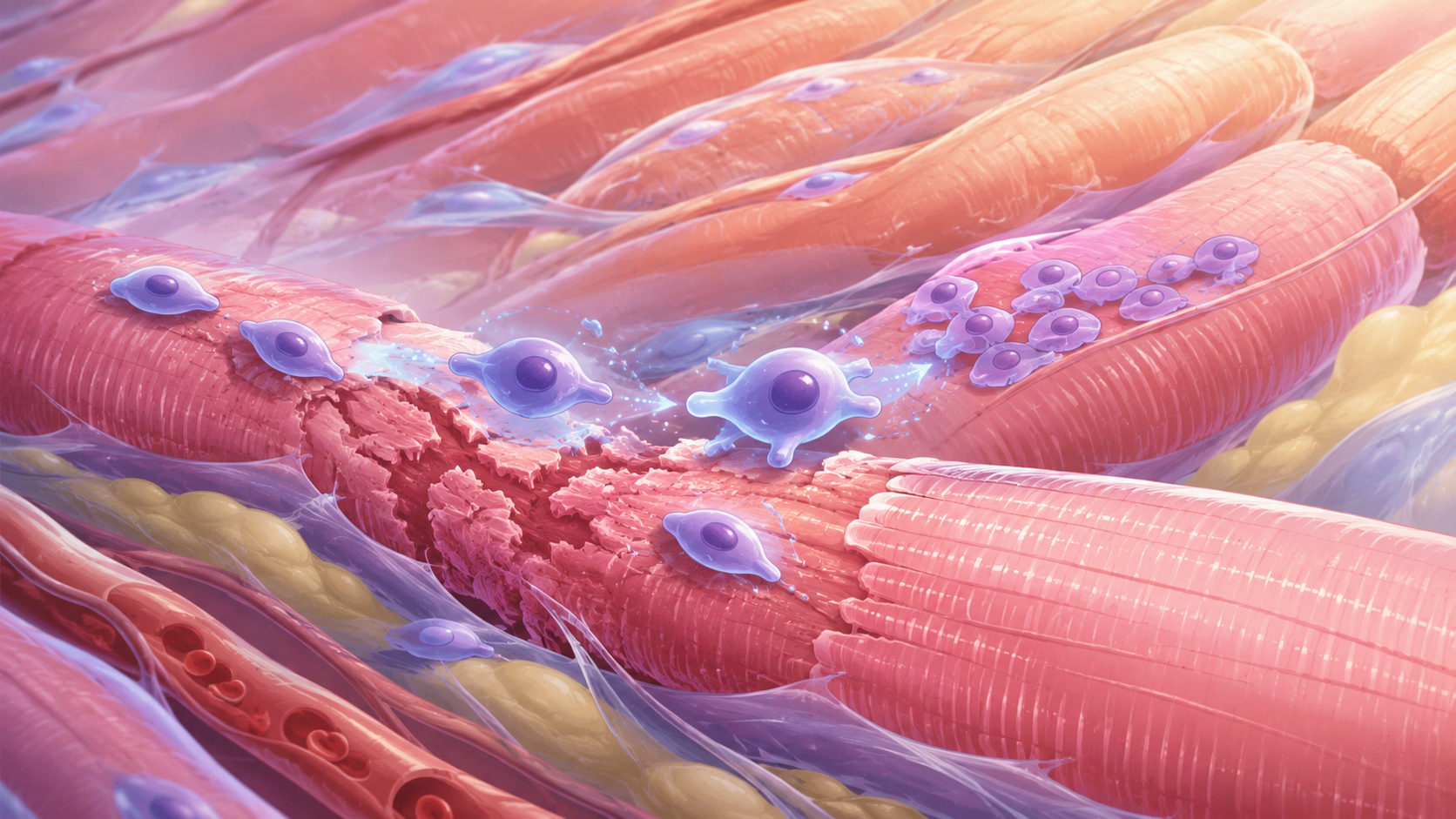
In animal models, studies show that the activation of satellite cells, the muscle stem cells responsible for the regeneration of muscle tissue, declines with age. Part of that decline appears to be associated with the reduction of IGF-1 axis signals. The question researchers ask is direct: if we restore IGF-1R signaling in aged muscle cells, does the regenerative response improve?
This is a question that does not yet have a definitive answer. But it is exactly the kind of question that IGF-1 LR3, with its extended half-life and broadened availability, allows to be investigated in a more controlled way. The literature documents studies with C2C12 myotubes and bovine satellite cells investigating the PI3K/Akt/mTOR pathway as a regulator of myogenic differentiation. The mechanisms are being mapped. The questions are being formulated with increasing precision.
If the reduction of the IGF-1R signal contributes to the decline of satellite cells with age, understanding that relationship opens one of the most relevant frontiers of muscle aging biology.
What we do not yet know, and why that is part of the story
It is important to be precise about what science has established so far in relation to IGF-1 LR3 specifically. Clinical studies in humans with this compound are practically absent from the indexed literature. The available evidence is predominantly in vitro and in animal models. Data from studies with native IGF-1 or with mecasermin, the recombinant IGF-1 approved by the FDA for specific pediatric conditions, cannot be extrapolated directly to IGF-1 LR3.
This does not diminish the value of the research. In fact, it indicates that this is an area still under construction, with knowledge gaps that represent genuine opportunities for scientific contribution. The absence of solid translational studies with IGF-1 LR3 in humans is an invitation for that research to exist, not a sign that the direction is wrong.
The GH/IGF-1 axis ages with the organism. And understanding that aging, with the right tools, the right questions, and the methodological rigor the question deserves, is one of the most promising directions of modern biology. IGF-1 LR3 is part of the tools that make that investigation possible.