CJC-1295 (No DAC)
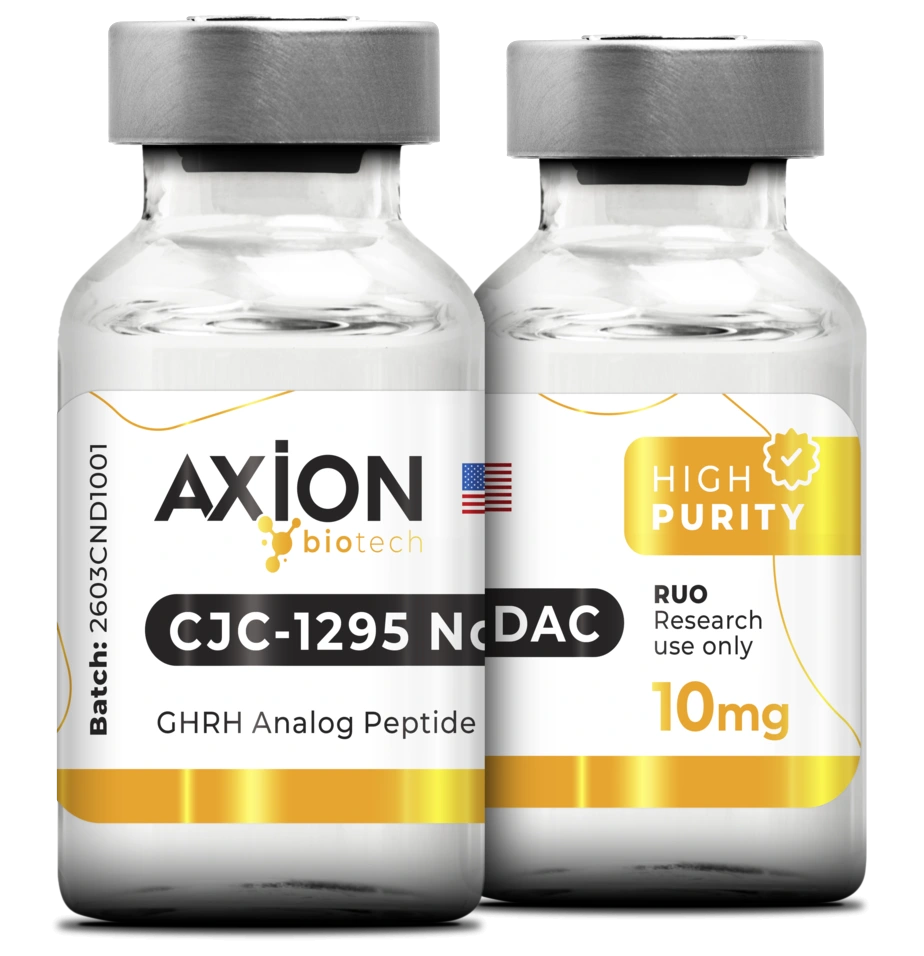
Access to the catalog is structured — not open by default.
-
SystemGH Axis System
-
TypeSynthetic peptide — 29 amino acids
-
CAS863288-34-0
-
FormulaC152H252N44O42
-
Mol. weight3,368.7 Da
-
FormLyophilized vial
-
Purity≥99% by HPLC
-
StatusActive

CJC-1295 Overview
CJC-1295 (No DAC), formally designated Modified GRF (1-29), is a synthetic 29-amino acid analog of Growth Hormone-Releasing Hormone (GHRH), engineered with four strategic amino acid substitutions to confer enzymatic stability absent in the native peptide. It belongs to AXION’s GH Axis System, a research compound cluster organized around the hypothalamic-pituitary-GH signaling axis.
The native GHRH is a 44-amino acid peptide rapidly degraded by dipeptidyl peptidase-IV (DPP-IV) in plasma, yielding a half-life of under 10 minutes, a pharmacokinetic constraint that limits its utility in research models. Modified GRF (1-29) addresses this through targeted structural modifications: substitution at position 2 (Ala → D-Ala) prevents DPP-IV cleavage; position 8 (Asn → Gln) reduces asparagine rearrangement; position 15 (Gly → Ala) enhances conformational stability; and position 27 (Met → Leu) prevents methionine oxidation during synthesis and storage. The result is a compound with an estimated half-life of approximately 30 minutes.
In preclinical models and early-phase clinical studies (conducted predominantly with the DAC variant), CJC-1295 analogs are investigated for their activity on the GHRHR/cAMP/PKA signaling cascade in somatotroph cells of the anterior pituitary. The No DAC form, by virtue of its intermediate half-life, is specifically studied for its capacity to generate growth hormone secretion pulses that more closely approximate the physiological pulsatile pattern.


CJC-1295 Research Directions
The published literature on CJC-1295 analogs spans foundational receptor pharmacology, preclinical growth models, and early-phase clinical studies. Below is an overview of the principal research areas documented in the scientific record.
- GHRH receptor pharmacology — characterization of GHRHR agonism, cAMP/PKA signaling cascade activation, and dose-response kinetics in anterior pituitary somatotroph cell models
- Pulsatile GH secretion dynamics — investigation of whether GHRH analog stimulation preserves or alters the physiological pulsatile pattern of GH release
- GH deficiency models — restoration of normal growth, body composition, and endocrine function in GHRH knockout (GHRHKO) mouse models via analog administration
- GH/IGF-1 axis biomarkers — proteomic identification of serum protein profiles associated with GH axis activation, with relevance to doping detection research
- Comparative pharmacokinetics — No DAC vs. DAC variants: differential half-life, receptor engagement duration, and downstream IGF-1 elevation profiles
- Rational peptide engineering — structural basis of DPP-IV resistance through amino acid substitution, as a model system for analog design methodology
CJC-1295 (No DAC) binds selectively to the GHRH receptor (GHRHR), a class B GPCR on somatotroph cells. Agonism activates Gs protein, stimulating adenylyl cyclase and raising intracellular cAMP.
Elevated cAMP activates protein kinase A (PKA), which phosphorylates transcription factors driving GH gene expression and accumulation of GH-containing secretory vesicles.
PKA-mediated signaling triggers calcium-dependent exocytosis of GH vesicles. The No DAC variant's ~30-minute half-life is investigated as a model for pulsatile stimulation patterns approximating physiological GH secretion.
GH acts on GH receptors in the liver and peripheral tissues, stimulating hepatic IGF-1 production. IGF-1 engages IGF-1R, activating PI3K/Akt and MAPK downstream signaling cascades.
The D-Ala substitution at position 2 prevents cleavage by DPP-IV — the primary degradation route for native GHRH. This modification is the principal determinant of the compound's extended plasma stability.

CJC-1295 Quality & Traceability
Every AXION compound is subject to analytical verification before release. Purity and traceability are not marketing attributes — they are part of the integrity of the research itself.
-
Certificate of Analysis
Available per lot on request.
-
Lot Traceability
Each vial carries a unique lot number linked to its full analytical record.
-
QR Verification
QR code on packaging links directly to the COA for that specific lot.
-
HPLC Verified
≥99% purity per lot. Verified by HPLC + Mass Spectrometry.
Learn more about our verification process: Quality & Testing

Related Compounds Compounds in the GH Axis System
All compounds below belong to the same biological system as CJC-1295 . Each is supplied as an RUO research compound.
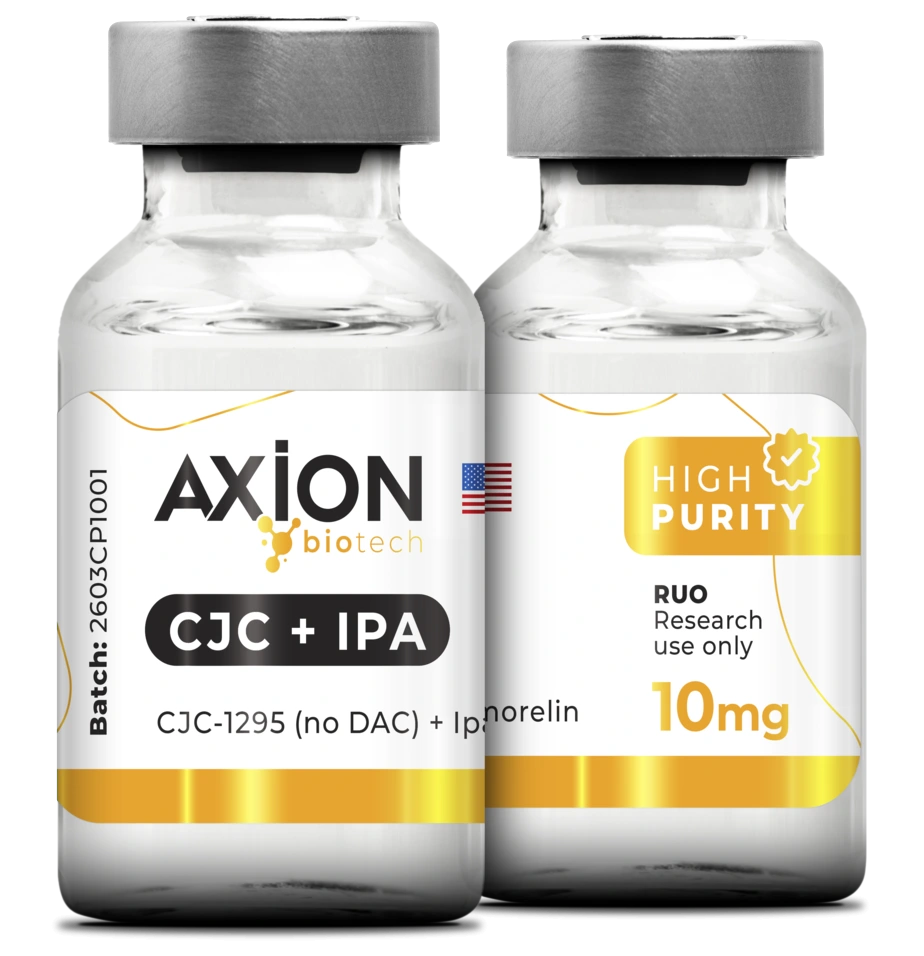
CJC-1295 + Ipamorelin
The GH axis is regulated by competing signals. Hypothalamic GHRH stimulates GH release; somatostatin inhibits it. The result is the pulsatile secretion pattern that characterizes normal GH physiology, brief surges,…
View molecule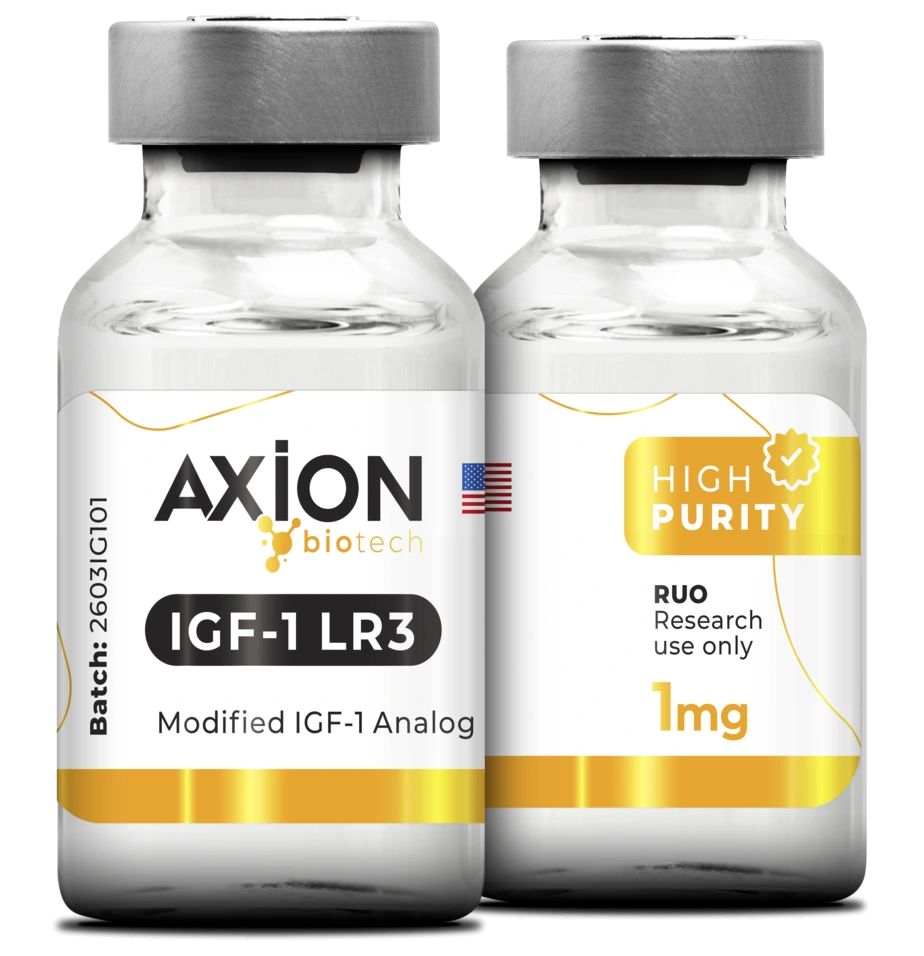
IGF-1 LR3
IGF-1 LR3 is a synthetic analogue of human Insulin-like Growth Factor 1, engineered with two structural modifications that substantially alter its pharmacodynamic profile relative to the native molecule. A substitution…
View molecule
Related Articles - Research Library Explore the Science Behind This System
The Research Library provides in-depth editorial coverage of the mechanisms, evidence, and investigative directions relevant to this system. Each article connects to one or more related compounds in the AXION catalog.
CJC-1295 (No DAC) is supplied by AXION Biotech exclusively for research purposes. This compound is not approved by the FDA, ANVISA, or any regulatory agency for human or veterinary use. No therapeutic claims are made or implied. All scientific data referenced on this page derives from preclinical (animal / in vitro) models unless explicitly stated otherwise.