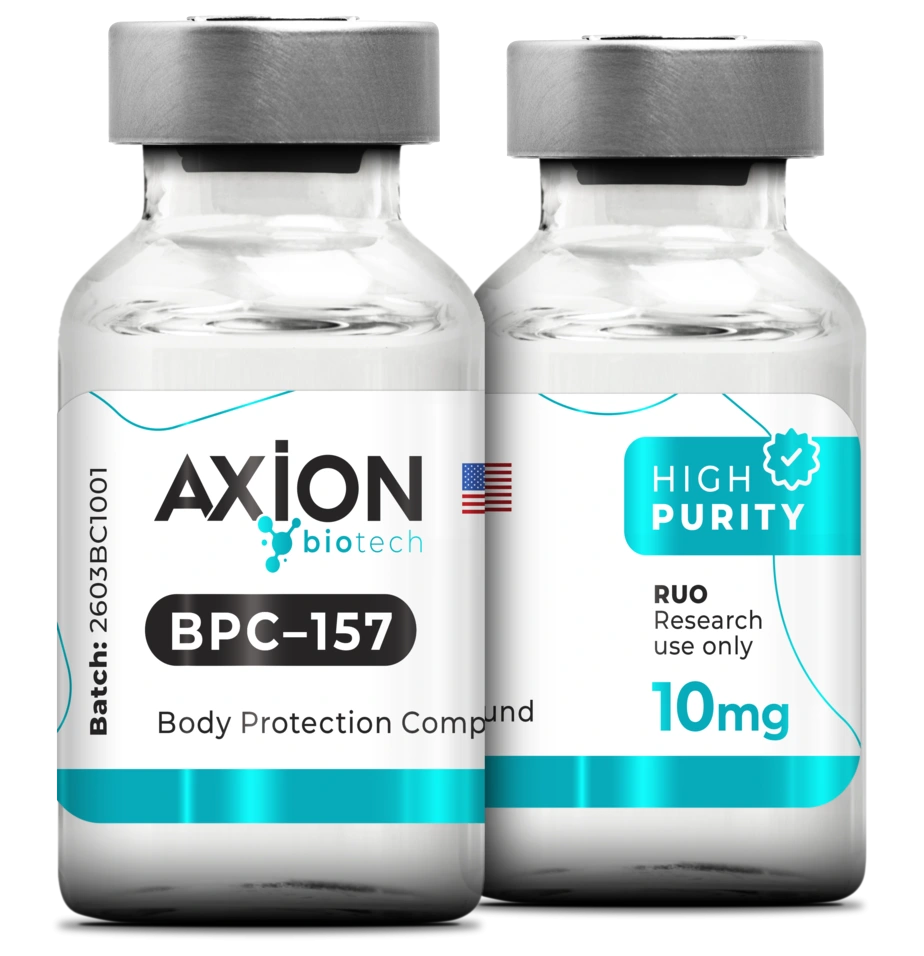
BPC-157
-
SystemRegenerative System
-
TypeSynthetic peptide — 15 amino acids
-
CAS137525-51-0
-
FormulaC62H98N16O22
-
Mol. weight1,419.53 Da
-
FormLyophilized vial
-
Purity>98% by HPLC
-
StatusActive

BPC-157 Overview
BPC-157 is a synthetic pentadecapeptide derived from a sequence found in human gastric juice. Composed of 15 amino acids, it belongs to AXION’s Regenerative System, a research compound cluster organized around signaling pathways associated with tissue integrity and cellular repair. It has been the subject of over 130 peer-reviewed publications since the 1990s.
In preclinical models, BPC-157 is investigated for its activity across several interconnected signaling cascades, including the VEGFR2/eNOS angiogenic axis, the FAK-paxillin pathway in tendon fibroblasts, and ERK1/2-mediated transcription factor activation. The compound is described in the literature as pleiotropic: its downstream effects engage multiple biological systems simultaneously, and its primary binding receptor has not yet been identified.
Among peptides studied in research contexts, BPC-157 carries a notable biochemical characteristic: documented stability in acidic pH (2-3) for over 24 hours, atypical for bioactive peptides. This property is relevant to research models exploring non-parenteral administration routes, and distinguishes it from structurally similar compounds in the Regenerative System.

BPC-157 Research Directions
The published literature on BPC-157 spans more than three decades and multiple biological contexts. Below is an overview of the principal research areas documented in preclinical studies.
- Musculoskeletal repair models — tendon, ligament, muscle, and bone physiology in rodent preparations
- Gastrointestinal and mucosal protection — ulcer models, colitis, fistula resolution, NSAID- and alcohol-induced mucosal damage
- Vascular function and angiogenesis — VEGFR2/eNOS axis, vasomotor tone regulation, ischemia/reperfusion contexts
- Neuroprotection and CNS modulation — spinal cord injury models, ischemic stroke, dopaminergic system interactions
- Tendon fibroblast migration — FAK-paxillin phosphorylation and extracellular matrix remodeling
- Oral administration research — gastric acid stability (pH 2-3, >24 h) as a differentiating property for route-of-administration models
- Growth hormone receptor potentiation — GHR upregulation in fibroblast models, JAK2 phosphorylation
Promotes VEGFR2 upregulation and endocytosis in endothelial models, activating Akt and downstream eNOS-mediated nitric oxide production (VEGF-dependent).
VEGF-independent pathway: Src and Cav-1 phosphorylation releases eNOS from its inhibitory complex in caveolae. Confirmed in isolated aortic tissue (Hsieh et al., 2020).
Dose-dependent FAK and paxillin phosphorylation in rat tendon fibroblasts, promoting cell migration and ECM remodeling — without direct effect on basal proliferation.
ERK1/2 activation in endothelial cells with upregulation of c-Fos, c-Jun, and Egr-1, regulating cell proliferation and vascular tube formation in vitro.
Dose- and time-dependent increase in GH receptor expression in tendon fibroblasts, potentiating GH response via JAK2 phosphorylation (Kuo et al., 2018).
Documented interactions with dopaminergic, serotonergic, GABAergic, and prostaglandin systems in animal models. Bidirectional modulatory activity suggested.

BPC-157 Quality & Traceability
Every AXION compound is subject to analytical verification before release. Purity and traceability are not marketing attributes — they are part of the integrity of the research itself.
-
Certificate of Analysis
Available per lot on request.
-
Lot Traceability
Each vial carries a unique lot number linked to its full analytical record.
-
QR Verification
QR code on packaging links directly to the COA for that specific lot.
-
HPLC Verified
>98% purity per lot. Verified by HPLC + Mass Spectrometry.
Learn more about our verification process: Quality & Testing

Related Compounds Compounds in the Regenerative System
All compounds below belong to the same biological system as BPC-157. Each is supplied as an RUO research compound.
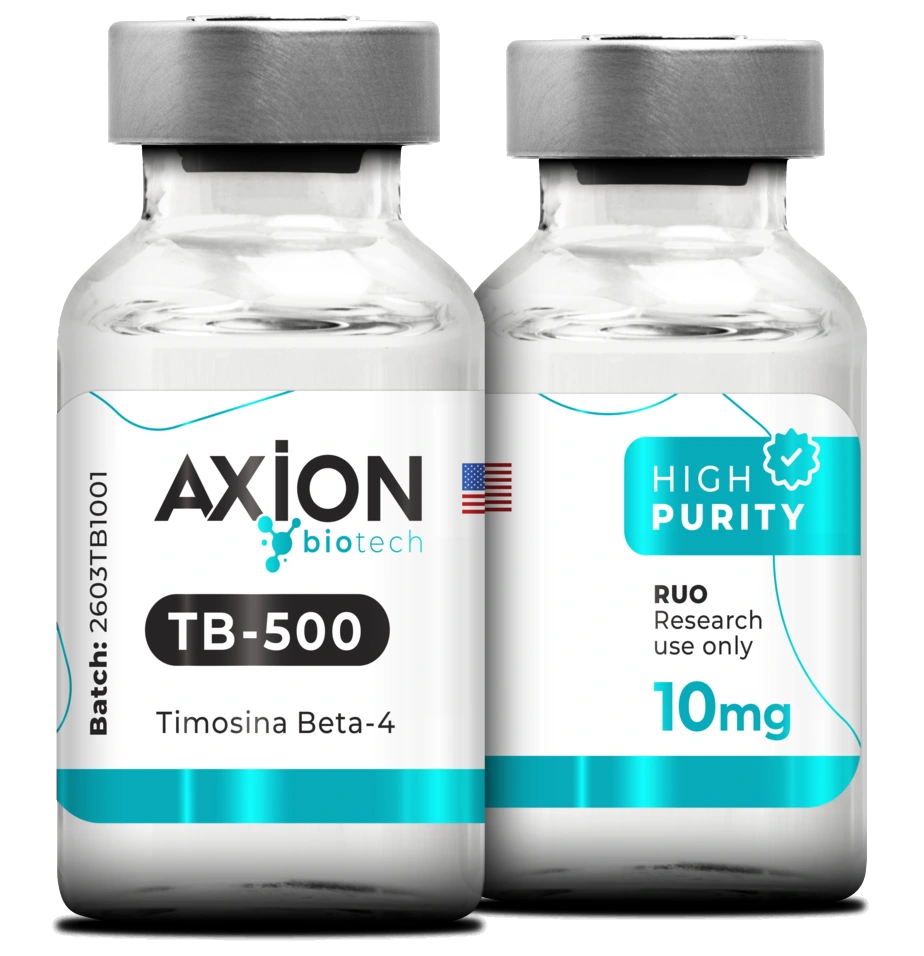
TB-500
TB-500 is a synthetic heptapeptide corresponding to positions 17-23 of Thymosin Beta-4, a naturally occurring protein encoded by the TMSB4X gene and found in virtually all nucleated mammalian cells. As…
View molecule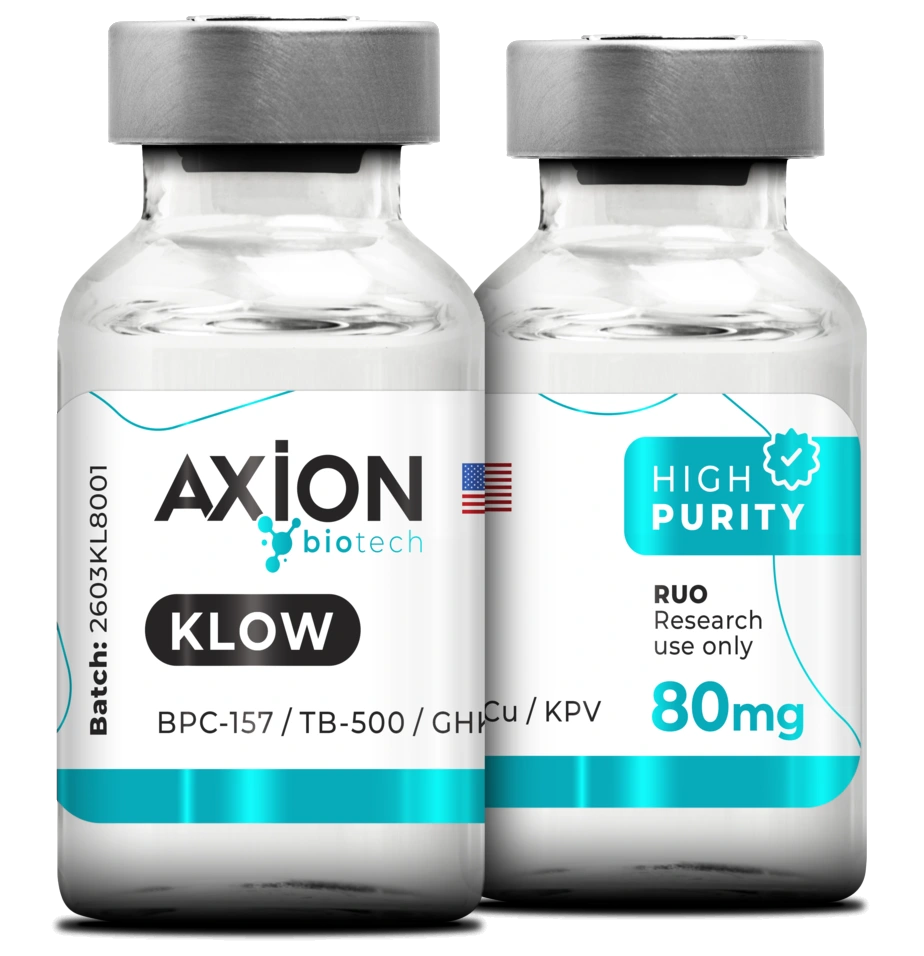
KLOW Blend
The KLOW Blend is a four-component research formulation within AXION's Regenerative System. It is not a supplement and not a protocol. It is a research design decision: a single vial…
View molecule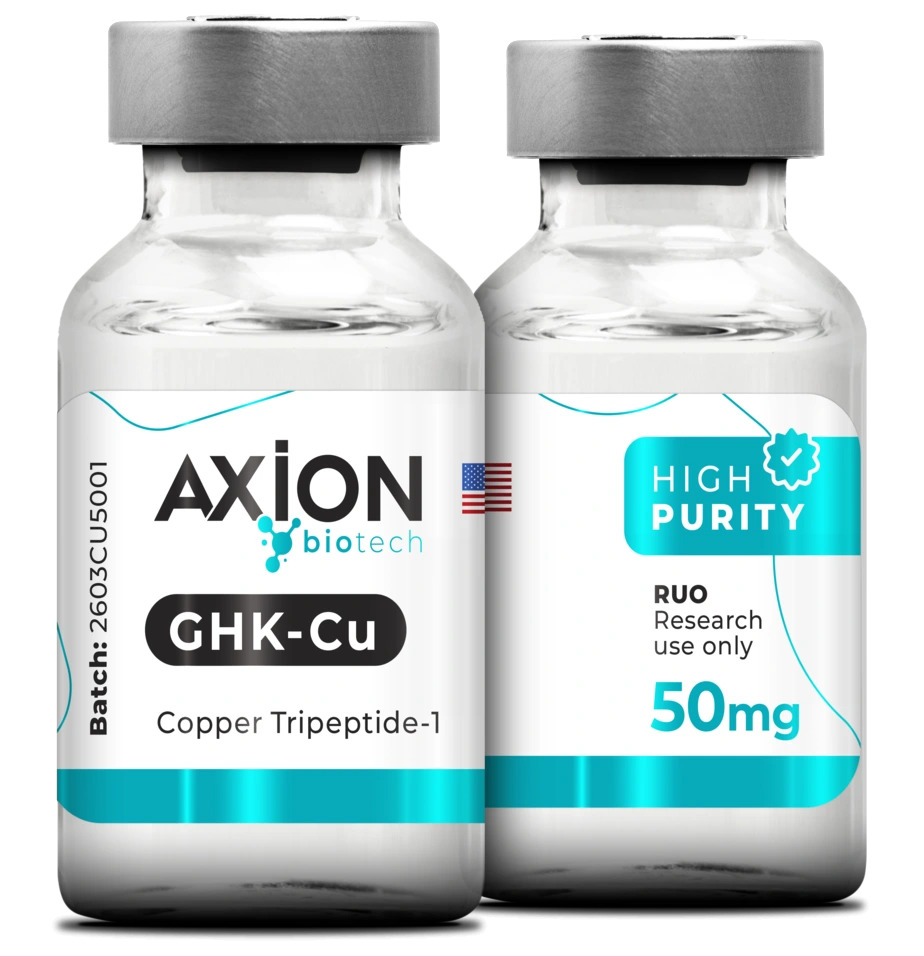
GHK-Cu
GHK-Cu is a naturally occurring human tripeptide first isolated from blood plasma by researcher Loren Pickart in 1973 at the University of California, San Francisco. Consisting of three amino acids,…
View molecule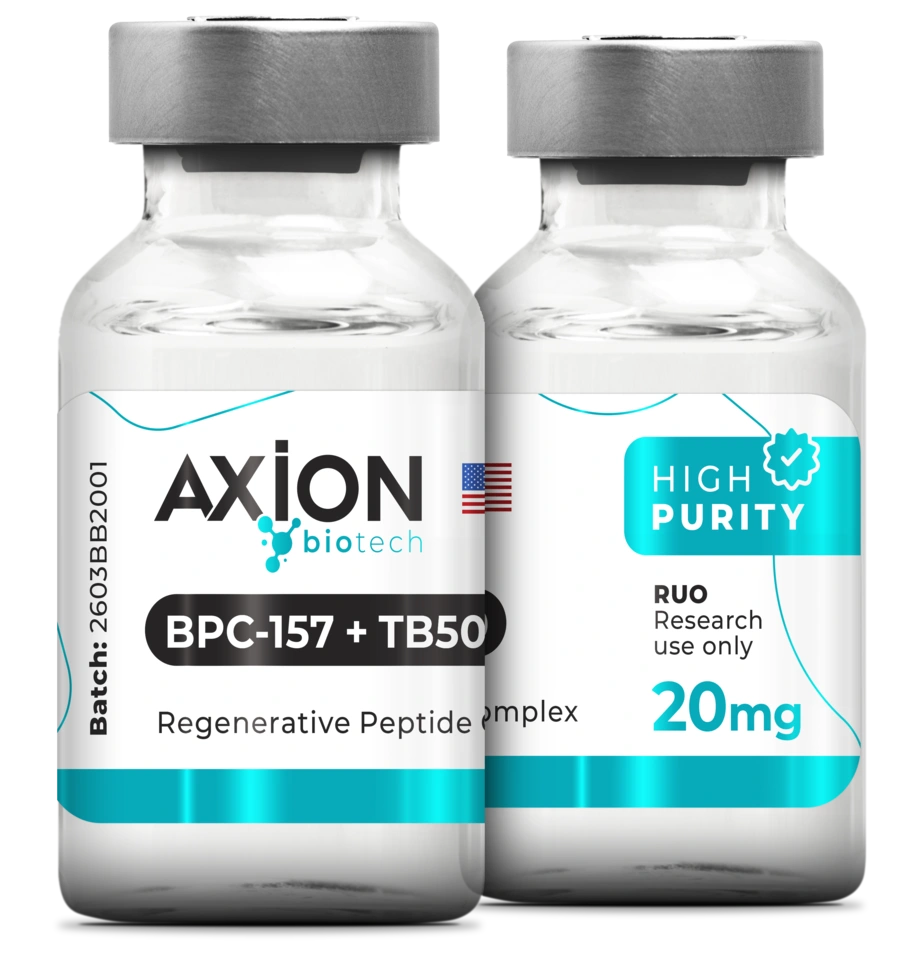
BPC + TB Blend
The regenerative cascade is not a single event. It unfolds in phases, and each phase has distinct limiting factors. The BPC + TB Blend is built on this observation: two…
View molecule
Related Articles - Research Library Explore the Science Behind This System
The Research Library provides in-depth editorial coverage of the mechanisms, evidence, and investigative directions relevant to this system. Each article connects to one or more related compounds in the AXION catalog.
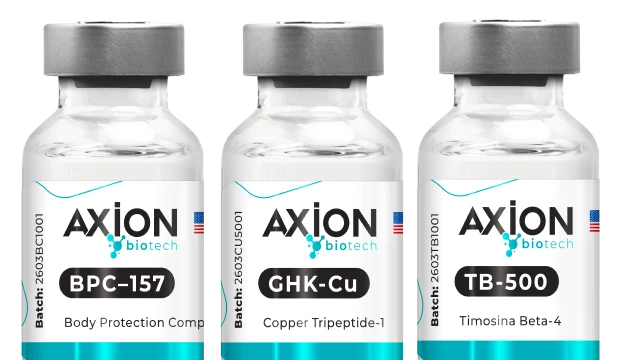
BPC-157 is supplied by AXION Biotech exclusively for research purposes. This compound is not approved by the FDA, ANVISA, or any regulatory agency for human or veterinary use. No therapeutic claims are made or implied. All scientific data referenced on this page derives from preclinical (animal / in vitro) models unless explicitly stated