Regenerative System

System Overview The Biology of Repair. Explored at the Molecular Level.
The Regenerative System encompasses the molecular and cellular machinery that biological research has long investigated in the context of tissue repair and structural recovery. At its core, this field examines how organisms respond to injury at the signaling level, from the initial inflammatory cascade to the coordinated recruitment of fibroblasts, endothelial cells, and progenitor populations that participate in rebuilding damaged tissue. Research in this domain is not confined to a single organ or tissue type: connective tissue, vasculature, epithelium, and the extracellular matrix each represent distinct but interconnected targets of investigation.


Core Mechanisms Four Research Axes in Regenerative Biology
The compounds in this system are investigated through four primary mechanistic frameworks. Each represents a distinct entry point into regenerative function
Preclinical studies examine how certain peptides interact with VEGFR2 signaling and the Akt-eNOS axis to investigate the formation of new vascular networks, a prerequisite for oxygen and nutrient delivery to sites of tissue damage.
Research models explore the coordinated balance between matrix metalloproteinases (MMPs) and their inhibitors (TIMPs), alongside collagen and glycosaminoglycan synthesis, the structural scaffolding that determines tissue architecture after injury.
Actin polymerization is a fundamental mechanism in directed cell migration. Studies investigate how G-actin sequestration by proteins such as Thymosin Beta-4 regulates cytoskeletal remodeling and the mobilization of repair-competent cell populations toward injury sites.
Tissue repair research increasingly focuses on the transition from pro-inflammatory to resolving states. Compounds derived from α-MSH's C-terminal domain are studied for their interactions with the NF-κB pathway and downstream cytokine profiles, examining how inflammation may be modulated without global immunosuppression.

Related Compounds Research Compounds in This System
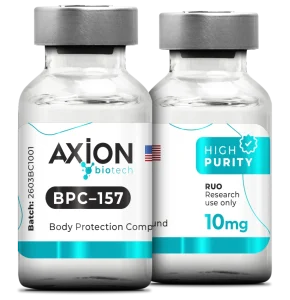
Synthetic pentadecapeptide studied for interactions with VEGFR2 and nitric oxide signaling in preclinical models of vascular biology and connective tissue.
View Product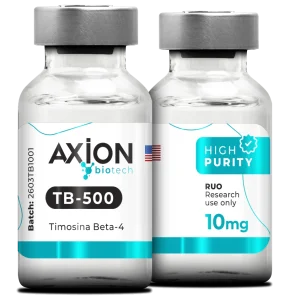
Synthetic fragment of Thymosin Beta-4; investigated for G-actin sequestration activity, directed cell migration, and angiogenesis across multiple tissue models.
View Product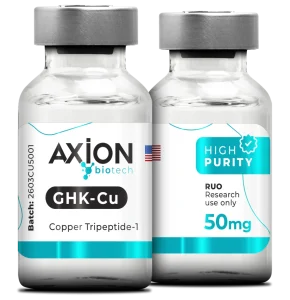
Copper-binding tripeptide with documented gene modulation activity; investigated in the context of ECM remodeling, collagen synthesis, and antioxidant enzyme regulation.
View Product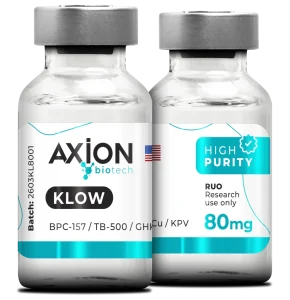
Extended formulation adding KPV to the GLOW matrix, enabling investigation of combined regenerative and inflammatory resolution signaling.
View Product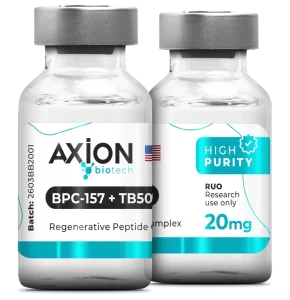
Binary formulation studied for complementary mechanisms via NO/VEGF (BPC-157) and actin/migration (TB-500) signaling.
View Product
Pathways & Biological Context Key Research Pathways
The following molecular pathways represent the primary mechanistic terrain investigated in this system. Individual compounds engage these pathways through distinct mechanisms.
- VEGF / VEGFR2 signaling axis
- Akt-eNOS (endothelial nitric oxide synthase) pathway
- NF-κB inflammatory transcription cascade
- MMP / TIMP extracellular matrix remodeling balance
- PI3K / Akt pro-survival and migration signaling
- ERK1/2 (MAPK) proliferative and fibroblast signaling
- HIF-1α hypoxia-responsive transcription
- TGF-β / SMAD fibrosis and collagen deposition regulation

Related Articles - Research Library Explore the Science Behind This System
The Research Library provides in-depth editorial coverage of the mechanisms, evidence, and investigative directions relevant to this system. Each article connects to one or more related compounds in the AXION catalog.
Somewhere between your twenties and your sixties, your body quietly reduces its production of a molecule that science believes sits at the center of your capacity to regenerate. This molecule has three amino acids. And almost no one knows its name.
View related research libraryThe Copper That Builds, how an ancient mineral and three amino acids became an object of research in tissue regeneration
View related research libraryThe Surprised Genome, when MIT researchers pointed a three-amino acid molecule at the human genome, the result surprised everyone, including them
View related research libraryRegenerative System • TB-500 • Translational Research • Fragment Biology
View related research libraryRegenerative System • TB-500 • Actin Dynamics • Cell Migration
View related research libraryRegenerative System • TB-500 • Preclinical Research • Frontiers of Knowledge
View related research libraryAll compounds listed in this system are classified as Research Use Only (RUO). They are not approved for therapeutic, diagnostic, or clinical use in humans or animals. AXION does not make therapeutic claims of any kind. Access to compounds is available through AXION's structured access model.