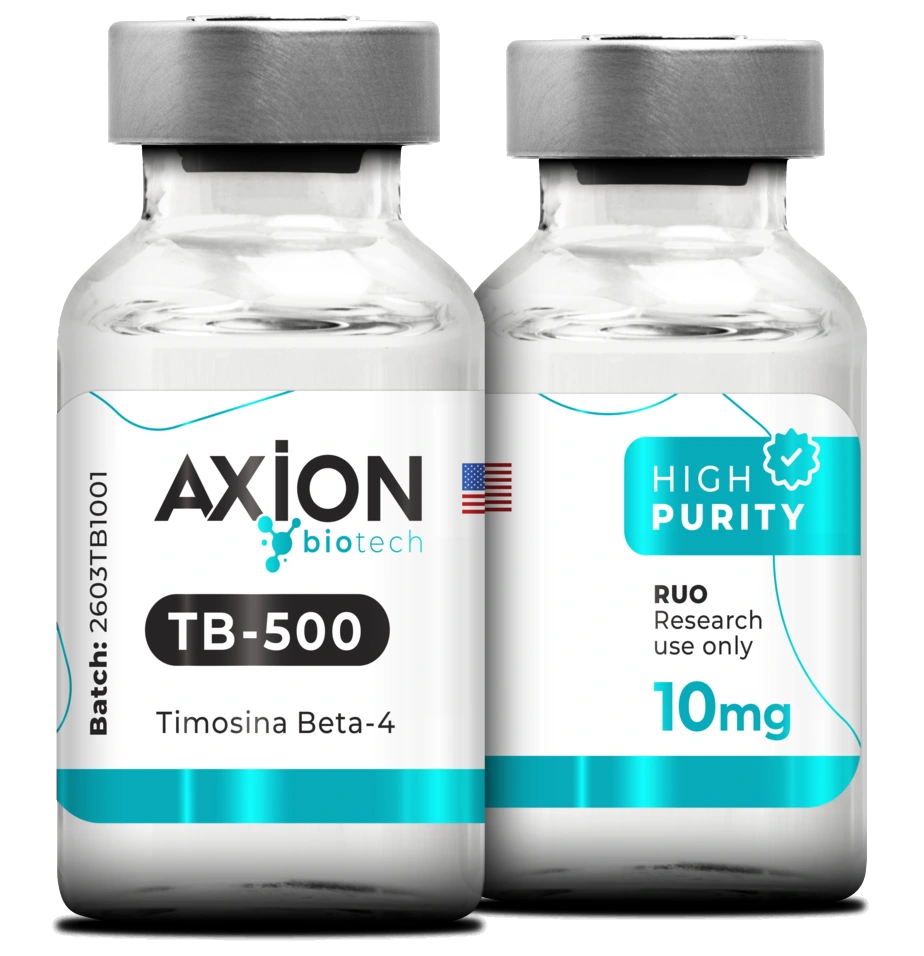
TB-500
-
SystemRegenerative System
-
TypeSynthetic peptide — 7 amino acids (heptapeptide)
-
Gene (parent protein)TMSB4X (Thymosin Beta-4)
-
SequenceAc-LKKTETQ (positions 17–23 of Thymosin Beta-4)
-
PubChem CID62707662
-
FormulaC₃₈H₆₈N₁₀O₁₄
-
Mol. weight889.02 Da
-
FormLyophilized vial
-
Purity>98% by HPLC
-
StatusActive

TB-500 Overview
TB-500 is a synthetic heptapeptide corresponding to positions 17-23 of Thymosin Beta-4, a naturally occurring protein encoded by the TMSB4X gene and found in virtually all nucleated mammalian cells. As a fragment, TB-500 isolates the actin-binding domain (Ac-LKKTETQ) identified as the primary effector region of the parent molecule. It belongs to AXION’s Regenerative System, a research compound cluster organized around signaling pathways associated with tissue integrity, cellular repair, and structural biology.
The parent protein, Thymosin Beta-4, is one of the most extensively studied endogenous peptides in repair biology. Published literature includes landmark studies in Nature (2004 and 2007) documenting cardioprotective and progenitor-mobilizing effects in murine models, as well as Phase II and Phase III clinical programs conducted by RegeneRx Biopharmaceuticals using the full-length recombinant protein. TB-500, as the synthetic fragment, is investigated as a research tool for studying the actin-sequestering mechanisms that underlie cell migration, angiogenesis, and inflammatory modulation in injury contexts.
A critical distinction governs the use of this compound in research: no published clinical trial has been conducted specifically with the TB-500 fragment (Ac-LKKTETQ) in humans. The available clinical evidence, Phases I, II, and III, derives from full-length Thymosin Beta-4. While pharmacological equivalence is mechanistically plausible, it has not been clinically validated. This distinction is documented and must be preserved in all research communications.

TB-500 Research Directions
The published literature on Thymosin Beta-4 and its synthetic fragment TB-500 spans multiple decades and biological contexts. Below is an overview of the principal research areas documented in preclinical studies and — where applicable — in clinical programs using the full-length parent protein.
- Actin dynamics and cytoskeletal remodeling — G-actin sequestration (1:1 binding to monomeric actin), regulation of G/F-actin equilibrium, and downstream effects on cell morphology and motility in injury models
- Cell migration in tissue repair contexts — keratinocyte and endothelial cell migration models; lamellipodia formation; extracellular matrix remodeling at wound sites
- Cardioprotection and progenitor mobilization — ILK-Akt pathway activation in murine infarction models; epicardial progenitor activation and neovascularization (landmark Nature publications, 2004 and 2007) — data from full-length Thymosin Beta-4
- Corneal healing — murine alkali-injury models demonstrating accelerated re-epithelialization and reduced PMN infiltration; Phase III clinical data for RGN-259 (full-length Thymosin Beta-4) in neurotrophic keratopathy
- Anti-inflammatory signaling — NF-κB pathway modulation in corneal epithelial cells; reduction of pro-inflammatory cytokine expression (IL-8) in in vitro models
- Dermal wound closure — multiple rodent models; collagen deposition, organized architecture, and reduced scar formation relative to controls
- Angiogenesis — endothelial cell migration assays; new vessel formation in ischemic tissue models; interaction with VEGF-related pathways
- Chronic wound research — Phase II data from RegeneRx for venous and pressure ulcers using topical RGN-137 formulation (full-length Tβ4)
TB-500 binds monomeric G-actin in a 1:1 complex via its Ac-LKKTETQ domain, regulating the dynamic equilibrium between G-actin (globular) and F-actin (filamentous). This modulation directly controls cytoskeletal reorganization, cell morphology, and directed cell migration in injury contexts.
Thymosin Beta-4 (full-length) activates Integrin-Linked Kinase (ILK), resulting in Akt phosphorylation, promoting cell survival and inhibiting apoptosis — documented in murine cardiac injury models (Bock-Marquette et al., Nature 2004). Specific replication by the TB-500 fragment has not been separately validated.
In corneal epithelial cell models, Thymosin Beta-4 inhibits TNF-α-stimulated NF-κB (p65) nuclear translocation, reducing pro-inflammatory cytokine expression (IL-8) and PMN infiltration. Data from full-length protein; fragment-specific data limited.
Thymosin Beta-4 promotes endothelial cell migration and new vessel formation in vitro and in vivo. VEGF-related pathway interaction proposed but not fully characterized for the TB-500 fragment specifically.
Thymosin Beta-4 (full-length) demonstrated capacity to activate epicardial progenitor cells in adult mice and promote simultaneous myocardial regeneration and neovascularization (Smart et al., Nature 2007). Specific activity of the TB-500 fragment in this context has not been separately validated.

TB-500 Quality & Traceability
Every AXION compound is subject to analytical verification before release. Purity and traceability are not marketing attributes — they are part of the integrity of the research itself.
-
Certificate of Analysis
Available per lot on request.
-
Lot Traceability
Each vial carries a unique lot number linked to its full analytical record.
-
QR Verification
QR code on packaging links directly to the COA for that specific lot.
-
HPLC Verified
>98% purity per lot. Verified by HPLC + Mass Spectrometry.
Learn more about our verification process: Quality & Testing

Related Compounds Compounds in the Regenerative System
All compounds below belong to the same biological system as TB-500. Each is supplied as an RUO research compound.
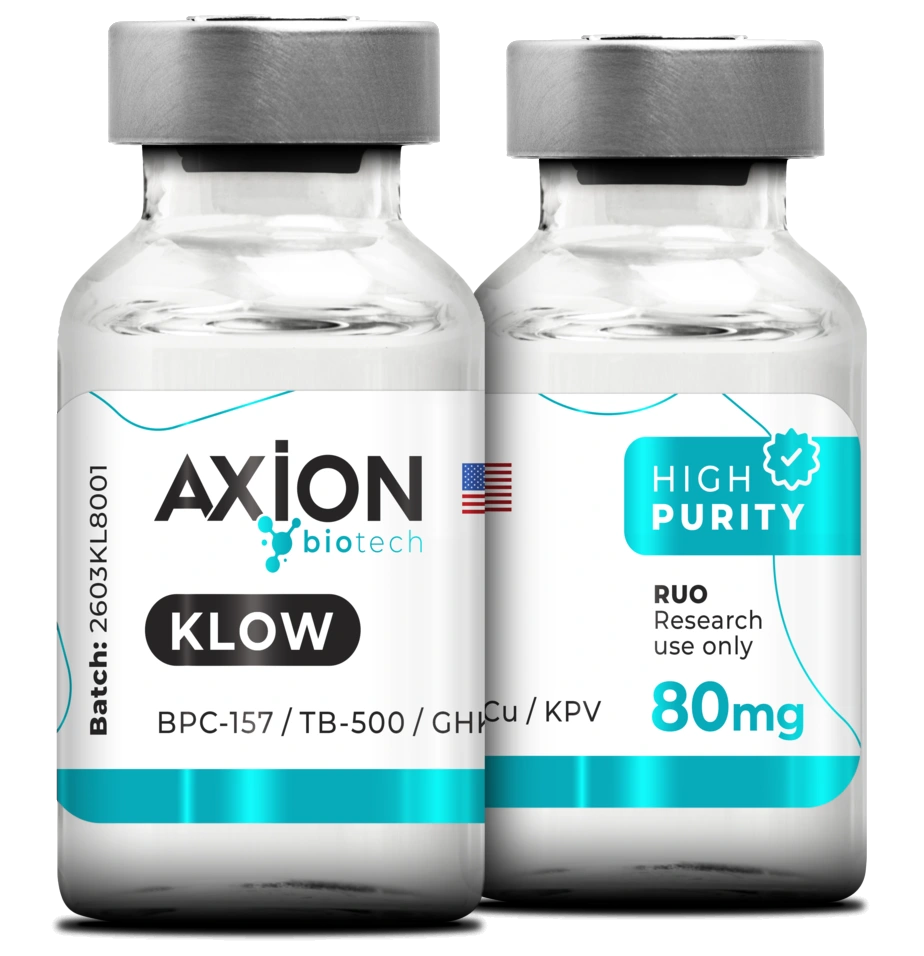
KLOW Blend
The KLOW Blend is a four-component research formulation within AXION's Regenerative System. It is not a supplement and not a protocol. It is a research design decision: a single vial…
View molecule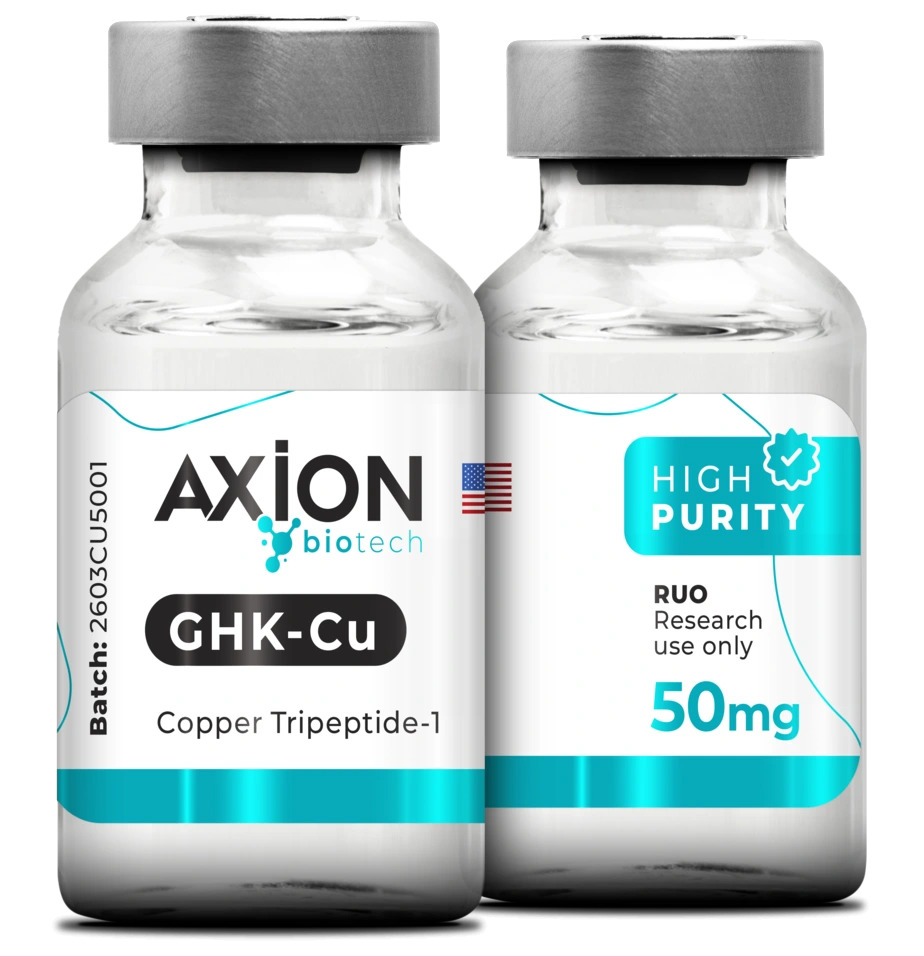
GHK-Cu
GHK-Cu is a naturally occurring human tripeptide first isolated from blood plasma by researcher Loren Pickart in 1973 at the University of California, San Francisco. Consisting of three amino acids,…
View molecule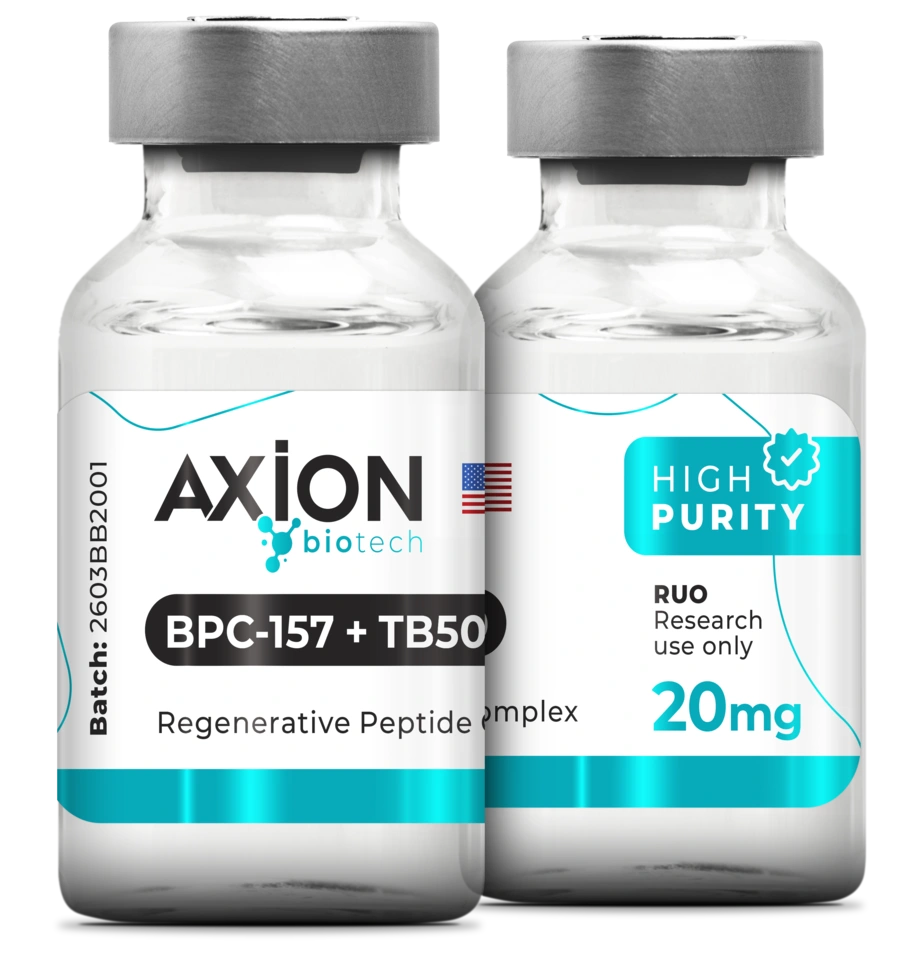
BPC + TB Blend
The regenerative cascade is not a single event. It unfolds in phases, and each phase has distinct limiting factors. The BPC + TB Blend is built on this observation: two…
View molecule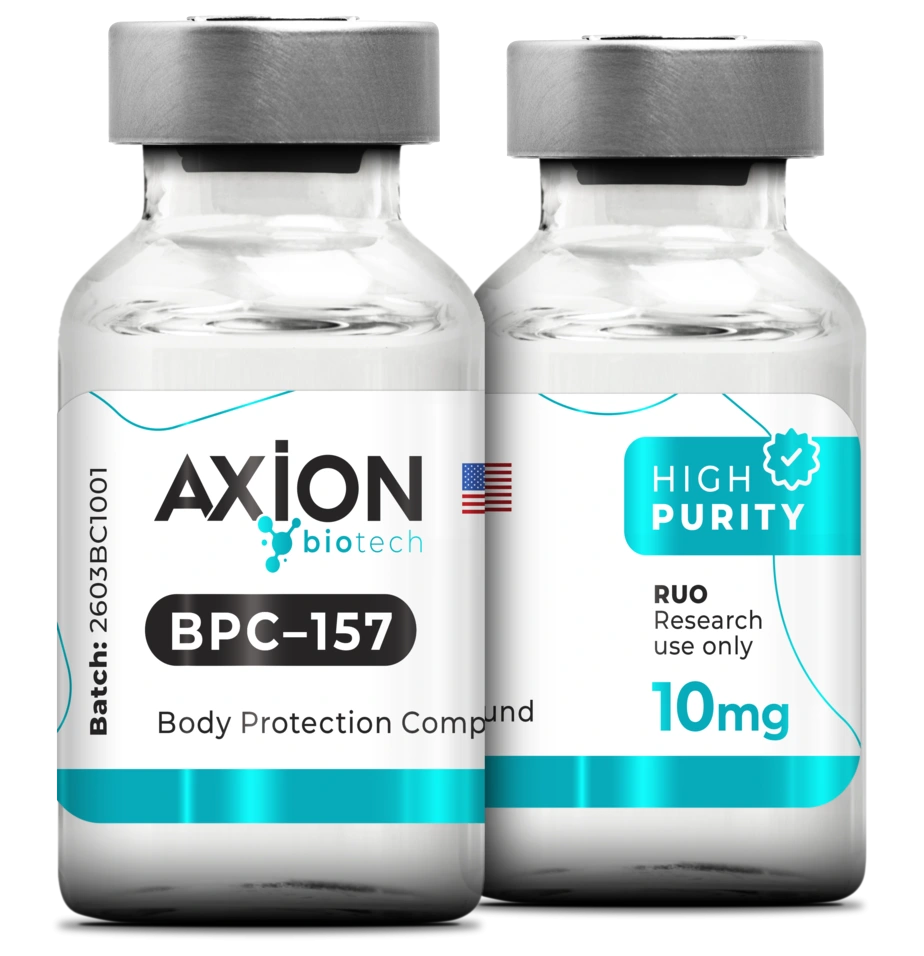
BPC-157
BPC-157 is a synthetic pentadecapeptide derived from a sequence found in human gastric juice. Composed of 15 amino acids, it belongs to AXION's Regenerative System, a research compound cluster organized…
View molecule
Related Articles - Research Library Explore the Science Behind This System
The Research Library provides in-depth editorial coverage of the mechanisms, evidence, and investigative directions relevant to this system. Each article connects to one or more related compounds in the AXION catalog.
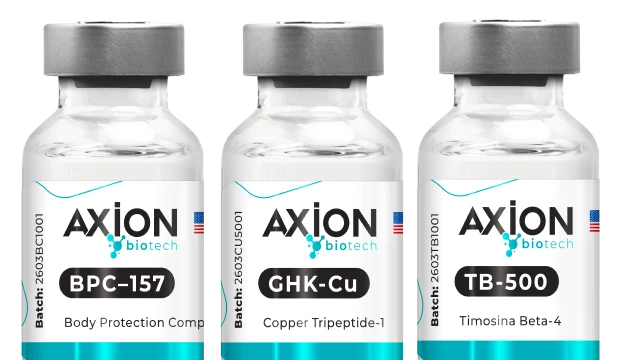
GHK-Cu (Copper Tripeptide-1) is supplied by AXION Biotech exclusively for research purposes. This compound is not approved by the FDA, ANVISA, or any regulatory agency for human or veterinary use. No therapeutic claims are made or implied. All scientific data referenced on this page derives from preclinical (animal / in vitro) models or limited pilot studies unless explicitly stated otherwise.